I Sogni Spesso Diventano Realta’

Nel decenio 1670, il padre gesuita fiammingo Ferdinand Verbiest (1623-1688) produceva quello che puo’ essere considerato il primo prototipo di ‘automobile’. A quel tempo, padre Verbiest si trovava in Cina, allora governata dalla dinastia Qing (帝國, Dà Qīng Dìguó, 1644-1912), e per accativarsi le simpatie dell’Imperatore Kangxi (康熙帝, Kāngxīdì, 1654-1722, r.1661-1722), inventava un veicolo in legno, lungo 60 centimetri spinto da una semplice turbina a vapore, conosciuto in occidente col nome di Turbina di Verbiest. Rimane il dubbio se tale veicolo sia stato veramente costruito.


La Turbina di Verbiest


Il primo veicolo in grado di trasportare una persona venne inventato dall’ingegnere militare francese Nicolas-Joseph Cugnot (1725-1804), che nel 1770 costruiva un veicolo a vapore a tre ruote, noto col nome di Carretto a Vapore che il Cugnot guidava per circa un’ora alla periferia di Parigi finendo col fermarsi contro il muro dell’Arsenale, un evento oggi considerato come il primo incidente automobilistico della storia.
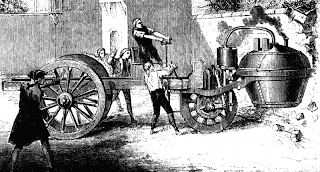

Il Carretto a Vapore di Cugnot


Secondo quanto scritto da Lee I-hwa (이이화 ) nel suo Storie nella Storia Coreana, le prime automobili vennero importate in Corea durante il regno di Re Sunjong ( , , 1874-1926. r.1907-1910) e dal successivo Governo Imperiale Giapponese nel 1911, ma ancora per molto tempo il mezzo principale di trasporto in Corea sarebbe rimasto la ferrovia.
A quel tempo, chi si recava al paese natio per le vacanze doveva letteralmente competere per procurarsi il biglietto del treno. Il 26 settembre 1969, il JoongAng Ilbo pubblicava l’articolo Spinti, Pressati e Bastonati nel quale si leggeva che 110 mila persone si erano recate alla stazione di Seoul (서울驛, 서울역, Seoul Yok) per salire su un treno che li portasse a casa per la festivita’ del Chusok (秋夕, 추석) e la polizia dovette usare bastoni di bambu’ per mantenere l’ordine. Piu’ tardi durante gli anni ’80, l’automobile comincio’ a diventare un mezzo popolare di trasporto e coloro che non erano in grado di procurarsi un biglietto del treno usavano l’auto per recarsi al paesello natio.
L'anno scorso, la situazione non cambiava di molto ed in occasione della festivita’ del Chusok per percorrere i 314 chilometri di autostrada che da Seoul porta a Pusan (釜山, 부산) si impegarono piu’ di nove ore.


L’autostrada Seoul–Pusan durante le festivita’ del Chusok


A nessuno piace stare seduto al volante di un’automobile per molte ore, percio’ una nuova invenzione potrebbe risolvere il problema. Due anni fa, lo specialista di computer americano Larry Page (1973- ), il fondatore di Google, osservando dal suo aeroplano privato il traffico nell’autostrada 101 nella Silicon Valley, pensava che solo la tecnologia poteva risolvere il problema salvando l’umanita’ dall’enorme quantita’ di tempo e spazio passato sulla strada. Da allora, Google sta cercando di sviluppare una automobile automatica senza autista che, secondo loro, riducendo le distanze fra auto sulla strada finirebbe col ridurre il tempo di guida e gli incidenti stradali. Secondo alcuni esperti, il numero di automobili sulla strada potrebbe raddoppiare rispetto a quello attuale con guida manuale. Se il progetto esce dal tavolo da disegno e diventa realta’, non passera’ molto tempo che ognuno di noi salira’ sulla sua auto informando della destinazione e l’auto pensera’ a tutto il resto mentre i passeggeri potranno nel fratempo riposare.
Il poeta e pittore inglese William Blake (1757-1827) diceva: “Quello che oggi e’ realta era prima solamente una immaginazione.” Lasciatemi sperare che quello che un tempo fu l’immaginazione del fondatore di Google possa presto trasformarsi in realta’ in modo che i futuri viaggi durante le festivita’ diventino un po’ piu’ confortevoli!


Giorgio Olivotto
Foto di Giorgio Olivotto
Seoul, Korea
19 febbraio 2012

Dreams Often Become Reality

In the 1670s, the Flemish Jesuit father Ferdinand Verbiest (1623-1688) introduced the first form of an ‘automobile’. He was in China as a missionary during the Qing Dynasty (大清帝國, Dà Qīng Dìguó, 1644-1912) and in order to attract the attention of the Kangxi Emperor (康熙帝, Kāngxīdì, 1654-1722, r.1661-1722), sometimes in the 1670s he invented a self-propelled wooden vehicle, 60-centimetre-long, with a simple steam engine that became known as Turbine of Verbiest. Whether it was ever actually built, remains in doubt.


The Turbine of Verbiest


The first self-propelled vehicle that could carry a person was invented by French military engineer Nicolas-Joseph Cugnot (1725-1804). In 1770, he built a three-wheeled steam-powered vehicle, known as Fardier à Vapeur (Steam Dray) and drove it for one hour on the outskirts of Paris. It crashed into the Arsenal wall, and the event is considered the first car accident.


The Fardier à Vapeur (Steam Dray) of Cugnot


The first cars were imported to Korea for King Sunjong (純宗 , 순종, 1874-1926. r.1907-1910) and the Japanese colonial government in 1911, according to Lee I-hwa (이이화 ) in his book, Stories in Korean History. For a long time, however, the core of modern transportation in Korea was the railway system.
Back then, people going home for the holidays had to compete for train tickets. The JoongAng Ilbo’s Sep. 26, 1969 issue featured an article titled Pushed, Pressed and Beaten, which said that 110 000 people went to Seoul Station (서울驛, 서울역, Seoul Yok) to catch trains home for the Chusok (秋夕, 추석) holiday, and the police wielded bamboo sticks to keep them in order. By the late 1980s, auto transportation had become common and people who could not get train tickets would drive home on the holidays. Last year was no different, and it took more than nine hours to ride the 314 kilometres from Seoul to Pusan (釜山, 부산) during Chusok holidays.


Seoul–Pusan expressway during Chusok holidays


No one wants to sit in a car for hours, and a new invention may remedy that problem. Two years ago, the American computer scientist Larry Page (1973- ), the founder of Google, was looking down at Highway 101 in Silicon Valley from his private airplane, and it occurred to him that technology could help save humans a tremendous amount of time and space on the road. Since then, Google has been developing driverless cars. The company believes that the automated vehicles will reduce the distance between cars on the road and reduce traffic accidents. According to experts, twice as many driverless cars could be on the road as cars driven by people. If the initiative gains traction, you may soon be able to inform your car of your destination and let it take you there automatically.
As English poet and painter William Blake (1757-1827) once said: “What is now proved was once only imagined.” Let’s hope that what was once imagined by the Google founder comes to fruition soon so that future journeys for the holidays will be a little more comfortable.


Giorgio Olivotto
Photo by Giorgio Olivotto
Seoul, Korea
February 19, 2012

I Senza Fissa Dimora

Un senzatetto, colui che ha perso il nido,
ha paura quando scende la notte.
Il crepuscolo sembra bello per gli altri,
ma e’ solamento l’ombra della paura per il senzatetto.
Beve soju come se fosse acqua,
il senzatetto si sdraia dove capita.

Questa poesia, che riflette la disperazione di un nosukcha (노숙자, senza fissa dimora), venne scitta su un muro di un rifugio per senzatetto a Seoul.
La sofferenza maggiore, oltre la fame, e’ quella di essere un senzatetto. Il poeta cinese Fan Chengda (范成大, 1126-1193), vissuto durante la dinastia Song (宋朝, 960-1297), scrisse, “Passare meta’ della propria vita mangiando nel vento e dormendo nella rugiada trasforma una persona in un pazzo.” Fan Chengda vedeva nel dolore quanto fosse arduo essere un senzatetto.
Dati governativi ufficiali mostrano che ci sono nell’intero paese piu’ di 500 000 persone senza una casa o una residenza fissa. Quando il paese dovette ricorrere all’aiuto del Fondo Monetario Internazionale (IMF), molte persone si trovarono sotto il peso di forti debiti, della perdita del posto di lavoro e smembramento della famiglia. Il problema che ne risulto' divenne ben presto un problema sociale e la societa’ ancora oggi guarda ai senzatetto in modo negativo, considerandoli degli incapaci, trattandoli come oggetti di disgusto, persino come criminali. Sono considerati la spazzatura della societa’.


Il letto dei nosukcha alla Stazione di Seoul


Durante le Olimpiadi di Seoul nel 1988 ed il vertice APEC del 2005 in Pusan (釜山, 부산), una citta’ nel sud del paese, i senzatetto vennero nascosti come se il paese si vergognasse di loro. Durante il vertice dell’APEC il piano per il controllo dei senza fissa dimora conteneva una clausola che chiaramente stabiliva che il senzatetto che si rifiutava di recarsi in una casa di ricovero sarebbe stato accusato di cattiva condotta. In realta’ i senzatetto venivano trattati da criminali.
Nel 2000, il Consiglio Nazionale Religioso ed i Gruppi Civici di Difesa dei Disocupati e dei Senza Fissa Dimora pubblicava la Dichiarazione dei Diritti dei Senzatetto, che iniziava con le parole, “Ci opponiamo al trattamento dei senzatetto come persone soggette ad un controllo ed isolate come esseri non appartenenti alla societa’ e dichiariamo che i senzatetto devono essere trattati come tutti gli altri membri della societa.’” Essi possono non avere un tetto dove rifugiarsi, ma sicuramente desiderano rimanere familiari, amici e buoni vicini di casa.
Nell’agosto dell’anno scorso la Korea Railroad Corporation (韓國鐵道公社, 한국철도공사, Hangukcholdogongsa) obbligava i nosukcha a sgombrare dalla stazione ferroviaria di Seoul (서울驛, 서울역, Seoulyok). Il provvedimento si basava sulle lamentele dei viaggiatori e sulla necesita’ di migliorare l’immagine della stazione. Tuttavia il provvedimento non e’ tale da risolvere il problema dei nosukcha. Invece che di obbligarli a sgombrare offrendo loro un posto dove ripararsi, sarebbe stato meglio provvedere un programma di riabilitazione in modo da migliorare le loro condizioni. Dopo tutto, i nosukcha sono i soli a provare la disperazione di voltare le spalle alla vita per vivere sul marciapiede di una stazione ferroviaria.

Giorgio Olivotto
Foto Giorgio Olivotto
Seoul Korea
12 febbraio 2012

The Homeless

A homeless who has lost the nest fears the nightfall.
Twilight may seem beautiful to others,
but it is only the shadow of the fear to the homeless.
Drinking soju as if it were water,
the homeless lays the shamed body anywhere
.

The poem was written on the wall of a homeless shelter in Seoul, reflecting the desperation of the nosukcha (노숙자, homeless).
The most painful suffering of all—besides hunger—is being homeless. Fan Chengda (范成大, 1126-1193) a Chinese poet from the Song Dynasty (宋朝, 960-1297) wrote, “Spending half of the life eating in the wind and sleeping in the dew turns a person into a fool.” He saw through the painful and arduous life of being homeless.
According to official government data, there are over 500 000 people nationwide without a home or stable residence. When the country went through the International Monetary Fund (IMF) bailout and global financial crisis, many people suffered from bad credit, unemployment and dissolution of the family. The problem has developed into a social issue, yet society still looks at the homeless in a negative way. They are considered idle and are treated as objects of disgust and even as criminals. They are viewed as the trash of society.

Homeless bed at the Seoul Station


During the 1988 Seoul Olympics and 2005 APEC Summit in Pusan (釜山, 부산), a city in the south of the country, the homeless were hidden as if they were shameful to the country. During the APEC meeting, the city’s homeless control plan included a clause that said any homeless person who refused to check into a shelter would be charged with a misdemeanour. In effect, the homeless were treated as criminals.
The Nationwide Council of Religious and Civic Groups for the Unemployed and Homeless issued the Declaration of Rights of the Homeless in 2000. It begins: “We oppose the treatment of homeless people as objects of control or isolated unsubstantial beings in society, and we declare that the homeless are equal members of society.” They may be homeless, but they wish to remain family, friends and neighbours.
In August last year the Korea Railroad Corporation (韓國鐵道公社, 한국철도공사, Hangukcholdogongsa) has forced out all homeless staying inside Seoul Station (서울驛, 서울역, Seoulyok). It is a move in response to customer complaints as well as to improve its image. But the stop-gap measure is not enough to resolve the homelessness issue. Instead of driving them out without offering an alternate place to stay, the homeless should be provided with rehabilitation measures to improve their situations. After all, the nosukcha themselves are the most desperate to escape a life of living in a train station.


Giorgio Olivotto


Photo by Giorgio Olivotto
Seoul Korea
February 12, 2012

Sukuk: L’Umiliazione di Canossa

Nel 1077 l’Imperatore Enrico IV (1050-1106, r.1056-1105) del Sacro Romano Impero arrivava al castello di Canossa (Reggio Emilia) nel nord d’Italia in umile penitenza davanti al papa Gregorio VII (c.1015-1085, p.1073-1085). Papa Gregorio, che qualche anno prima avena scomunicato l’imperatore, a quel tempo abitava al castello di Canossa e l’imperatore dovette attendere per 4 giorni fuori le mura del castello in mezzo alla neve, a digiuno e vestito solamente di indumenti intimi prima di essere ricevuto in udienza dal papa al quale umilmente chiedeva clemenza e la revoca della scomunica. L’umiliazione di Canossa ristabiliva simbolicamente il potere assoluto della chiesa cattolica.


L’Imperatore EnricoIV alle porte del castello di Canossa
(Acquaforte di August von Heyden, 1827-1897)


Prima dell’incontro di Canossa, il papa e l’imperatore vivevano in uno stato di simbiosi. Il papa, per espandere l’influenza della chiesa cattolica, aveva bisogno della potenza militare dell’imperatore ed in cambio dava all’imperatore il diritto di nominare i prelati. Papa Gregorio pero’ voleva cambiare l’accordo nella convinzione che la chiesa doveva essere indipendente dal potere dello stato in modo da ripristinare completamente i diritti eclesiastici. Per far questo nel 1075 il papa cancellava il diritto di nomina dei prelati da parte dell’imperatore che reagiva detronizzando il papa che ricambiava il gesto con la scomunica. L’umiliazione di Canossa rappresenta la vittoria del papa verso l’imperatore.
La storia europea nel Medio Evo e’ zeppa di guerre fra stato e chiesa, entranbi in conflitto su chi doveva avere la supremazia. L’espressione americana, “separazione fra stato e chiesa,” venne usata per la prima volta nel 1802 dal Presidente Tommaso Jefferson (1743-1826, p.1801-1809) in una lettera indirizzata alla chiesa battista di Danbury, Connecticut. Piu’ tardi il principio si rifletteva nella costituzione del paese ed il principio venica preso in considerazione da molti altri paesi che avevano optato per un regime democratico.
Il governo coreano per anni ha proposto l’introduzione del sukuk (صكوك‎, stumento legale, spesso definito ‘buono islamico’) nel mercato finanziario del paese. Lo sforzo pero’ si dimostrava vano in quanto si trovava davanti ad un’ostacolo insormontabile: le chiese conservatrici, che avevano appoggiato il governo del Presidente Lee Myung-bak (李明博, 이명박, 1941- , p.2008- ), si opponevano al sukuk ed alla proposta di esentare dalle tasse l’emissione dei buoni islamici. La loro opposizione si basava sulla credenza che sukuk rappresenta denaro pericoloso, che parte dei profitti possono essere usati per sovenzionare il terrorismo fondamentalista islamico. Facevano notare che la maggioranza dei paesi che avevano introdotto il sukuk non esentavano dalle tasse le operazioni di transizione dei buoni islamici e criticavano il governo di favoritismo disonesto.
Parlamentari ferventi cristiani appartenenti al Gran National Party (한나라당, Hannara-dang), il parito di maggioranza, si opponevano strenuamente al passaggio della legge, mentre altri parlamentari piu’ neutrali erano restii nella paura di perdere i voti della comunita’ cristiana. Il Presidente Lee Myung-bak, un fervente presbiteriano che doveva gran parte della sua vittoria alle elezioni presidenziali alla comunita’ cristiana, evitava di esprimere un’oppinione sull’argomento.
La costituzione coreana stipula chiaramente che “non deve essere riconosciuta una religione di stato e che la chiesa e lo stato devono agire separatamente.” Un’osservatore estraneo non puo’ non avere l’impressione che la versione XXI secolo dell’Umiliazione di Canossa e’ avvenuta qua in Corea!

Giorgio Olivotto
Seoul, Corea
29 gennaio 2012

Sukuk: The Walk to Canossa

In 1077, Emperor Henry IV (1050-1106, r.1056-1105) of the Holy Roman Empire crossed the Alps and arrived at the castle of Canossa near Reggio Emilia in northern Italy to perform penance to Pope Gregory VII (c.1015-1085, p.1073-1085). Pope Gregory, who excommunicated the emperor not long before, was staying in the castle at the time, but the emperor had to stand in the snow outside of the castle for four days without food, wearing only underclothes. Only after Emperor Henry knelt before the pope and begged for forgiveness did the pope lift the excommunication. This was the Walk to Canossa, which symbolically established the supreme power of the Catholic Church.


Emperor Henry IV at the gate of the castle of Canossa
(Etching by August von Heyden, 1827-1897)


Before the incident, the pope and the emperor had a symbiotic relationship. To expand the Catholic Church, the pope needed the military power of the emperor. In return, the church gave the emperor the right to appoint clergymen. Pope Gregory, however, wanted to change that, believing the church should be independent from the state to fully restore the rights of the church. So Pope Gregory, in 1075, rescinded Emperor Henry’s right to elect bishops. The emperor then dethroned the pope, and the pope, in return, excommunicated the emperor. The Walk to Canossa represented the pope’s victory over the emperor.
The history of Europe in the Middle Ages is dotted with wars, as the church and the state were constantly at odds with each other over who would have the upper hand. The American expression, “separation between church and state,” was first used by President Thomas Jefferson (1743-1826, p.1801-1809) in a letter sent to a Baptist church in Danbury, Connecticut, in 1802. This principle was later reflected in the country’s constitution and spread to other countries that supported democracy.
The Korean government has pushed for years the introduction of sukuk (صكوك‎, legal instrument, often referred to as ‘Islamic bond’), to the local capital market. The effort, however, proved to be fruitless as it stumbled on an unforeseeable obstacle: the conservative churches, among the biggest supporters of President Lee Myung-bak (李明博, 이명박, 1941- , p.2008- ) administration, opposed sukuk and related proposal of tax exemption for local issuers of the Islamic bonds. They believed that sukuk is dangerous money; they suspected that part of the profit from sukuk may be used to support fundamentalist Islam terrorism. They argued that most other countries that conduct sukuk didn’t exempt tax from the transaction, and criticized the Korean government for giving undue favours.
Ardent Christian lawmakers of the governing Grand National Party (한나라당, Hannara-dang) fiercely opposed the bill, while other neutral lawmakers were reluctant to deal with the issue on fears of losing the Christian vote. Since President Lee Myung-bak is a presbyter and a large part of his victory in the presidential election was due to the Christian community, he remained silent about the issue.
The Korean Constitution stipulates that “No state religion shall be recognized, and church and state shall be separated.” An offside observer can only have the impression that the 21st century version of the Walk to Canossa is happened in Korea!

Giorgio Olivotto
Seoul, Korea
January 29, 2012

Dall’altra Parte del Muro

Se in questi giorni uno decidesse di fare una passeggiata dentro alla reggia di Toksu (德壽宮, 덕수궁, Toksukung), notera’ facilmente i lavori di ristrutturazione del Sokjojon (石造殿, 석조전, Casa di Pietra). I seouliti hanno dato il benvenuto alla notizia che sono venuti alla luce i disegni originali del Sokjojon e che la Casa di Pietra sara’ ristrutturata come era stata progettata. Sulla copertina della cartella contenente i disegni c’era una pianta della reggia al tempo di Re Kojong (高宗,고종, 1852-1919, r.1863-1907) e la vera storia del Sokjojon.
Nel 1868, Re Kojong decideva di costruire una reggia in stile occidentale. Un anno prima, il re aveva fatto ritorno alla reggia dopo essersi rifugiato per quasi un anno dentro all’Ambasciata Russa. Il Regno di Choson (朝鮮國, 조선국, Chosonkuk) era cosi’ fragile che persino il suo re non era in grado di proteggere la sua vita e per salvarsi doveva rifugiarsi dentro all’ambasciata di un paese straniero. Dopo quell’esperienza umiliante, Re Kojong dichiarava il Grande Impero dell’Han (大韓帝國, 대한제국, Taehanjeguk), Choson non era piu’ un regno che aveva bisogno dell’approvazione della Cina, ma un impero di diritto. Il primo progetto intrapreso dall’impero fu la costruzione del Sokjojon che doveva diventare la reggia dell’imperatore. Nel 1910, la reggia imperiale veniva completata mentre Choson veniva annesso al Giappone. L’imperatore costruiva la sua reggia senza realizzare che il suo impero stava per crollare. I disegni originali del Sokjojon non possono che far pensare a complicate congiure storiche.
Certamente l’imperatore riteneva necessario avere una nuova reggia per ripristinare la dignita’ del suo impero o forse pensava che la reggia di Toksu era troppo piccola. Ma veramente pensava che una nuova reggia era prioritaria, quando la sua dinastia era moribonda, il popolo in miseria e le sorti della nazione come la fiamma di una candela che oscilla al vento? Pochi anni prima, nel 1894, Isabella Lucy Bird (Mrs. Bishop, 1831-1904), della Royal Geographical Society, viaggiava in lungo e largo nel regno di Choson riportando le sue impressioni nel libro Corea ed i suoi Vicini (1898). Nel libro si legge che Seoul era pervasa da una puzza insopportabile al punto che era difficile credere che la capitale del paese fosse cosi’ sozza: i drenaggi nelle strade erano invasi dalle acque di scarico delle case adiacenti.
Mentre il popolo viveva in miseria e la nazione stava crollando, dall’altra parte del muro di cinta della reggia, l’imperatore stava costruendo un nuovo palazzo reale. Il progressista Yun Chi-ho (尹致昊, 윤치호, 1864-1945) scriveva nel suo diario che l’imperatore stava costruendo un “reggia giocattolo”. Anche se il costo per la nuova reggia non era certamente sufficiente a salvare il suo impero, Re Kojong doveva impiegare ogni mezzo a sua diposizione per comprare armi, costruire linee ferroviarie e creare industrie. Evidentemente, credeva che il re fosse lo stato, ma gli occhi del re non erano capaci di vedere al di la’ del muro di cinta della sua reggia.


La reggia di Toksu vista dall’altra parte del muro di cinta


La tragica sorte del Sokjojon rispecchia la realta' della Corea di oggi. I coreani stanno costruendo una nuova reggia senza guardare cosa c’e’ dall’altra parte del muro di cinta. In altre parole, i leader del paese sono indaffarati nel costruire le loro regge, proprio come faceva Re Kojong.
L’anno scorso i seouliti sono andati alle urne per esprimere la loro oppinione sull’offrire un pranzo gratuito ai scolaretti della citta’. Il risultato era evidentemente legato al futuro del paese. Oggi, l’America e parecchi paesi europei stanno vivendo l’incubo delle loro fragili economie sull’orlo del crollo sotto l’enorme peso di un debito nazionale generato dalla mancanza di programmazione delle spese pubbliche. I politici usano i fondi pubblici per accapararsi voti ed e’ percio’ naturale che il Presidente Lee Myung-bak (李明博, 이명박, Yi Myong-bak, b.1841, p.2008) richiami l’attenzione sulla salute delle finanze statali. Questo pero’ non e’ il vero problema, il problema di “dare ai ragazzi il pranzo gratis”, quanto quello che potrebbe dare inizio alla rottura degli argini. Il sindaco di Seoul Oh Se-hoon (吳世勳, 오세훈, O Se-hun, b.1961) stava cercando di infilare il dito nella diga, tutto da solo, come quel ragazzo olandese che salvava l’Olanda.
Ma nessuno si fece avanti ad aiutarlo, persino il partito politico al quale apparteneva si rifuitava di supportarlo. Perche? I suoi supposti sostenitori stavano solamente pensando a costruire le loro regge: “Forse saro’ il candidato alle prossime elezioni presidenziali, quindi quali sono le conseguenze? Sono a malapena riuscito ad accapararmi una posizione di rilevo nel partito e non voglio certamente correre rischi.” Tutti fanno i loro calcoli e senza curarsi del futuro della nazione, costruiscono le loro regge. Non sono diversi da Re Kojong, il qui impero crollava prima ancora che la reggia fosse terminata.
Anche i proprietari dei conglomerati industriali coreani non sono poi molti diversi da Re Kojong. Il mondo dall’altra parte del muro di cinta delle loro regge si lamenta e critica ed e’ ormai giunto il momento per loro di guardare oltre al muro per rendersi conto di cosa sta succedendo nel mondo reale. Non devono solo portare avanti i loro imperi industriali con la scusa della libera competizione. Il magnate ed uomo d’affari americano Warren Edward Buffett (b.1930) afferma che quelli che guadagnano piu’ di un miliono di dollari all’anno devono essere pesantemente tassati. Chiaramente, non e’ questa la ricetta che fara’ rivivere l’economia americana, ma Buffett sta guardando dall’altra parte del muro e sa che nobblesse oblige. Recentemente l’ex capo del Grand National Party, Chung Mong-joon (鄭夢準, 정몽준, Chong Mong-jun, b. 1951), istituiva l’Asan Sharing Foundation con un fondo personale di 500 miliardi di won (US$ 435 milioni) ed affermava: “I conglomerati coreani hanno avuto successo, ma quando la comunita’ dei cittadini del paese ne risulta danneggiata, gli affari sono destinati a fallire.” Chung ha ragione. Mentre le strade sono invase da puzze insopportabili ed il popolo e’ in miseria, i ricchi costruiscono palazzi dentro le mura delle loro regge. Dovrebbero ricordarsi che Re Kojong andava in esilio prima ancora che la sua reggia diventasse abitabile.
I coreani, specialmente i ricchi e coloro che sono al potere, hanno bisogno di riflettere sull'ossessione di costruire regge splendenti. Stanno forse voltando le spalle alla comunita’ dei cittadini che vive dall’altra parte del muro per difendere i loro interessi personali? Il pranzo gratuito ai scolaretti di Seoul rappresenta la grande filosofia coreana: i coreani hanno un grande senso di reponsabilita’ verso i loro figli. Ma devono proprio lasciare in eredita’ alla prossima generazione un pesante debito nazionale solamente per garantirsi oggi piu’ benessere? I coreani non devono chiudersi nelle loro regge ed evitare di guardare al futuro dall’altra parte del muro di cinta.


Giorgio Olivotto
Foto di Giorgio Olivotto
Seoul, Corea
22 gennaio 2012

The other Side of the Wall

If one takes a stroll in the Toksu Palace (德壽宮, 덕수궁, Toksukung) here in Seoul these days, one will find Sokjojon (石造殿, 석조전, Stone House) undergoing reconstruction. Seoul citizens recently welcomed the news that the blueprint for Sokjojon was discovered, and the royal structure will be reconstructed according to its original design. On the cover of the blueprint, one can find the map of the palace at the time of King Kojong (高宗,고종, 1852-1919, r.1863-1907) as well as the history of Sokjojon.
In 1898, King Kojong decided to build a Western-style palace. The year before, the king had returned to the palace after taking refuge at the Russian Embassy for nearly a year. The Kingdom of Choson (朝鮮國, 조선국, Chosonkuk) was so fragile that even the king could not protect his own life and had to escape to the safety of a foreign delegation. At the end of that humiliating experience, King Kojong declared the Great Han Empire (大韓帝國, 대한제국, Taehanjeguk), Choson was no longer a kingdom that needed approval from China but an empire of its own right. The first project of the empire was Sokjojon, which was to be the main palace for the emperor. In 1910, the imperial palace was completed, but Choson was annexed to Japan. The emperor started to build a palace without realizing that his empire was crumbling. The blueprint of Sokjojon conjures complicated feelings about history.
The emperor may, of course, have needed a new palace in order to restore the dignity of his empire. Perhaps, he felt Toksu Palace was too small. Nevertheless, did he really think a new palace was a top priority? At the time, Choson was barely surviving. The people were in distress, and the fate of the country was a candle flickering in the wind. Only a few years earlier, in 1894, Isabella Lucy Bird (Mrs. Bishop, 1831-1904), a member of the Royal Geographical Society, travelled all over Choson and wrote Korea and Her Neighbours (1898). She wrote that Seoul was pervaded by the foulest smell and it was hard to believe that the capital city was so filthy. Drains were filled with sewage from households.
When the people were in misery and the nation declining on the other side of the palace wall, the emperor was building a new palace. Enlightenment activist Yun Chi-ho (尹致昊, 윤치호, 1864-1945) lamented in his diary that the emperor was building a “toy palace.” Even if the cost of building the palace was insufficient to save the empire, King Kojong should have used every possible means to buy weapons, build railroads and create industries. He believed the king was the state, but the eyes of the king could not see beyond the palace perimeter.


Toksu Palace from the other side of the wall


The tragic fate of Sokjojon mirrors Korea’s reality today. Korean may be building a new palace without looking over the wall. More accurately, the leaders of the country are immersed in building their own palaces—just like King Kojong.
Last year citizens of Seoul voted on free school lunches. The result was directly related to the future of Korea. Today, the United States and many European countries are struggling with their economies. One of the main problems is oversized national debts due to unplanned financial spending. Politicians liberally used money to please the voters. It is only natural that President Lee Myung-bak (李明博, 이명박, Yi Myong-bak, b.1941, p.2008) emphasizes healthy government finances. This is not an issue of “let’s have children eat free.” Rather, it could be the beginning of the break in the levee. Mayor Oh Se-hoon (吳世勳, 오세훈, O Se-hun, b.1961) was trying to put a finger in the dike, all alone, just like the Dutch boy who saved Holland.
However, no one went forward to help Oh. Even the party with which he is affiliated was not backing him up. Why? His supposed supporters were only thinking about their own palaces. “I might run for president next year, so what are the consequences? I barely got a party executive position, and I don’t want to risk it.” They all had their own calculations. Without caring about the future of the nation, they were building their palaces. They were no different from King Kojong, whose empire fell before the completion of the palace.
Conglomerate owners too are not much different from King Kojong. The world outside their palaces is full of criticism and complaints. It is about time they look over the wall and see what is going on in the real world. They should not just proceed in the name of free competition. The American business magnate Warren Edward Buffett (b.1930) said that those who earn more than US$ 1 million a year should be taxed heavily. Of course, that is not a prescription to revive the US economy, but Buffett has certainly looked over the wall and knows noblesse oblige. Former Grand National Party chairman Chung Mong-joon (鄭夢準, 정몽준, Chong Mong-jun, b. 1951) recently set up the Asan Sharing Foundation with a fund of 500 billion won (US$ 435 million) saying: “Corporate Korea has been successful, but when the community of citizens is damaged, businesses will fail.” He is right. When the streets are full of foul odours and suffering, the rich have been building palaces within their walls. They should not forget that King Kojong was deprived of the palace even before living there.
Koreans need to see if they are obsessed with building glitzy palaces, especially those with money and power. Are they turning away from the community outside the wall because of their personal interests? Free meals for Seoul children are all about Korean greater philosophy. Koreans have a sense of responsibility to take care of their children. Should they transfer the bulging debt to the next generation just to pursue a little more comfort now? Koreans should not be locked in the palace of the present and fail to look over the wall into the future.

Giorgio Olivotto
Photo by Giorgio Olivotto
Seoul, Korea
January 22, 2012

Repubblica di Casino’

Verso la fine dell’anno scorso, il presidente dell’Organizzazione Nazionale Coreana per il Turismo ha proposto di aumentare il numero di casino’ in Corea. Il suggerimento fa immediatamente pensare alla storia del cieco e dell’elefante. Chiaramente, nella posizione di cheer leader nella promozione del turismo nel paese non ha tutti i torti nel giustificare il suggerimento con il quale aprire un nuovo casino’ rappresenta una soluzione magica: e’ un’ottimo richiamo per i turisti in arrivo, crea nuovi posti di lavoro ed aiuta il governo con l’aumentare le entrate. Tuttavia, il presidente tocca solo una parte dell’elefante. Prima di proporre l’apertura di altri casino’ e la possibilita’ dei coreani di frequentare i casino’ riservati solo agli stranieri, dovrebbe vedere l’intero elefante, non solo le zanne.
Oggi in Corea c’e’ un solo casino’ che apre le sue porte ai cittadini del paese, il Kangwon Land; ma dopo la sua apertura sono stati riscontrati parecchi suicidi, aziende in bancarotta, criminalita’ e famiglie distrutte. Kangwon Land fu un’eccezione alla legge coreana in modo da aiutare i minatori della zona che finivano col perdere il lavoro a causa della chiusura delle miniere.


Giocatori di changgi (c.1900)


Non c’e’ dubbio che i coreani sono particolarmente attratti verso la competizione ed il gioco d’azzardo. L’anno scorso, la vendita dei biglietti della lotteria e’ notevolmente aumentata al punto da allarmare gli osservatori politici. La Commissione Nazionale per il Controlo del Gioco d’Azzardo (NGCC), che opera alle dipendenze dell’Ufficio del Primo Ministro, sta analizzando la possibilita’ di ‘sospendere’ la vedita dei biglietti della lotteria basandosi sul fatto che l’anno scorso sono stati venduti biglietti per 3.1 trilioni di won (US$ 2.7 miliardi) superando, per la prima volta dall’inizio del controllo nel 2009, il limite massimo imposto dal governo di 2.8 trilioni di won. Tuttavia, la proposta di sospensione della lotteria, anche se temporanea, sta creando una forte reazione da parte dei fanatici del gioco, oltre che colpire duramente i circa 18 000 botteghini di vendita e’ le altre numerose attivita’ legate al gioco. Come conseguenza, e’ molto probabile che la commissione alzera’ il limite massimo in modo da assorbire l’aumento delle vendite.
La ragione principale per l’aumento delle vendite e’ da ricercarsi nell’introduzione di un sistema pensionistico basato sul Lotto e nella decisione di incorporare nel premio le molte vincite non ritirate. Tuttavia, anche la vendita di altre forme di gioco d’azzardo e’ notevolmente aumentata. Le statistiche della NGCC mostrano che gli incassi dei sei maggiori tipi di gioco d’azzardo—corse dei cavalli, gare di ciclismo, gare nautiche, casino’, Lotto e lotterie sportive—hanno raggiunto l’anno scorso un totale di 17 trilioni di won (US$ 14.9 miliardi), corrispondente all’1.5 percento delle entrate nazionali, cifra da confrontare con i 6.2 trilioni di won registrati nel 2000. Le statistiche coprono solo il gioco d’azzardo legalizzato, cioe’ quello acconsentito dalla legge con la scusa di provvedere svago al cittadino e nello stesso tempo di creare fondi per varie opere assistenziali. Calcoli piu’ realistici sono impossibili se si deve tener conto dell’enorme estensione del gioco illegale, quello che viene svolto nei retrobottega degli ‘officetel’ cittadini, nei ‘Quonset Huts’ (una etichetta americana per i capannoni prefabricati di forma semicilindrica) che operano nelle campagne ed i numerosi siti Internet--l’anno scorso le autorita’ sono riuscite ad individuare 7 971 di questi siti!
A tutto questo deve essere aggiunta la moltitudine di uomini d’affari ed artisti vari noti per sperperare quattrini nei casino’ all’estero. Un gruppo di ricerca universitario ha calcolato che il 'costo socio-economico’ dovuto al gioco d’azzardo in Corea ammonta all’incredibile cifra di 80 trilioni di won (US$ 70 miliardi). Di questi il costo dovuto alle ore produttive perse ammonta a due terzi del totale, ed il rimanente e’ dovuto alle perdite finanziarie nel settore domestico ed industriale ed al costo dovuto al trattamento medico degli intossicati ed alla loro condanna giudiziaria. Per esempio, 9 su 10 frequentatori di Kangwon Land mostrano segni di intossicamento ed il numero di frequentatori di casino’, corse ai cavalli, gare in bicicletta e similari ha raggiunto l’anno scorso i 40 milioni su una popolazione nazionale di 48 milioni. Circa il 6.1 percento dei giocatori coreani ha bisogno di un adeguato trattamento, una cifra molto piu’ alta del 1.4 percento registrato in Nuova Zelanda, del 2.1 percento in Germania e del 1 percento nello stato americano dell’Arizona.
Perche’ i coreani corrono a comprare biglietti della lotteria? La risposta e’ semplice: vogliono arrichirsi dalla sera alla mattina, pur sapendo benissimo che e’ quasi impossibile raggiungere il traguardo. Corre voce che la loro corsa all’immediata richezza e’ solo una questione mentale. D’altra parte, si sente molto spesso dire che la vendita di biglietti della lotteria aumenta durante i periodi di crisi economica, anche se non e’ certamente piacevole vedere che i biglietti vengono venduti come fossero noccioline. Alla luce di tutto questo la commissione ha stabilito un limite massimo di vendita, anche se tale limite e’ piuttosto libero e non vincolante a termini di legge. Sarebbe preferibile che il governo contenesse le vendite entro il limite stabilito creando mezzi tali da convincere il cittadino a lasciar perdere le stupidagini. Questa corsa al gioco d’azzardo riflette la triste realta’ che i coreani hanno poche speranze di mobilita’ sociale, visto che la differenza nelle entrate fra ricchi e poveri continua ad aumentare. Le panchine del campo delle corse di cavalli a Kwachon sono costantemente affollate da disoccupati, e lo stesso avviene nelle piste di corse in bicicletta e nei bacini di gare nautiche sorti nei suburbi di Seoul, alla ricerca del primo premio in modo da trovare una via d’uscita alla loro vita senza speranze. Probabilmente molti di loro non hanno altre alternative di vita oltre al gioco, anche se scomettere soldi alla lotteria rappresenta uno spreco di denaro--le probabilita' di vincita sono molto meno di una su un milione. Il mercato coreano del gioco d’azzardo e’ classificato al sesto posto nel mondo con una cifra molto maggiore di quella registrata in Germania e nel Regno Unito. E’ noto che alcuni paesi dell’OECD hanno messo al bando i casino’. Dieci dei 16 casino’ coreani aperti solo agli stranieri operano regolarmente in perdita; aprire le porte di questi casino’ ai coreani rappresenta il mezzo migliore per far quadrare il loro bilancio a spese dei compatrioti.
La societa’ nel suo insieme e le autorita’ governative dovrebbero rivedere la loro politica sul gioco d’azzardo invece che costantemente aumentare il limite massimo di vendita dei biglietti, prima che il paese guadagni la pessima oppinione di assere un paradiso per giocatori. Impianti e fattorie fanno la Corea forte, non i casino’!

Giorgio Olivotto
Seoul, Korea
15 gennaio 2012

Republic of Casinos

The president of Korea National Tourism Organization late last year has proposed additional casinos in Korea. His suggestion brings to mind the story of the blind men and the elephant. As a cheer leader for promoting tourism, he can rightly say opening a casino could be a magic solution. It can attract inbound tourists, create more jobs, and help the government increase revenue. However, he touches only one part of the elephant. He must see the whole picture of the elephant, not its tusk, before calling for licensing other casinos and opening of foreigners-only gambling houses to locals.
Today Korea has only one casino open to locals, the Kangwon Land, but numerous suicides, bankruptcies, crimes, and family breakdowns took place following the opening. Kangwon Land was an exception to the Korean law in a move to help miners of the area unable to make an income due to dead mines.


Changgi players (c.1900)


Out of any doubt, Koreans have an unrivalled propensity for competition and gambling. Last year, lottery tickets sale show a sharp increase at the point to alert government overseers. The National Gaming Control Commission (NGCC) under the Prime Minister’s Office is reported to be considering issuing a ‘stoppage order’ for the sales as the total lottery sales last year reached 3.1 trillion won (US$ 2.7 billion), passing the authorities-set limit of 2.8 trillion won for the first time since the current gambling oversight system started in 2009. However, a lottery suspension—even if only temporary—will invite strong complaints from lottery fans, and it will be too severe a blow to the nation’s about 18 000 Lotto ticket sellers and numerous others related to the lottery business. So it is more likely that the gaming commission would raise the ceiling to absorb the sales increase.
One of the reasons for such increase is to be found in the starting of pension-type Lotto and the decision to carry over unclaimed prize money. Yet, the sales of other forms of betting have also grown sharply. NGCC statistics reveal that the six major gambling businesses—horseracing, game cycling, motorboat racing, casinos, Lotto and sports lottery—had a combined total revenue of 17 trillion won (US$ 14.9 billion) last year or 1.5 percent of national income. This is compared to 6.2 trillion won in 2000. These figures only cover the legal, open kinds of gambling, which are allowed under the excuse of providing entertainment for the people and generating funds for some charitable programs. Correct calculation is simply impossible if is to add the huge scale of illegal gambling in this country, in ‘officetel’ backrooms, ‘Quonset Huts’ (American trademark for a prefabricated shelter of semi-cylindrical form) in the countryside and the numerous Internet gambling sites. Authorities checked 7 971 online gambling sites last year.
To all this should be added the many businessmen and entertainers known to be squandering dollars in overseas casinos. One university research team has come up with the incredible figure of 80 trillion won (US$ 70 billion) as the ‘socio-economic cost’ of gambling in Korea. Loss of productive manpower accounts for two-thirds of the social cost. The rest is the damage to domestic and industrial finances and extra expenditures for the medical treatment gambling addicts and their criminal punishment. For example, 9 out of 10 visitors to Kangwon Land reportedly show signs of addiction and the number of gamblers in casinos, horseracing, bicycling and similar reached last year 40 million in a country with a population of 48 million. About 6.1 percent of Korean gamblers purportedly need counselling or treatment. The rate is much higher than 1.4 percent in New Zealand, 2.1 percent in Germany and 1 percent in the US state of Arizona. Why Koreans are rushing to buy lottery tickets? The answer is simple: They want to become rich overnight, even though they know that it is almost impossible to hit the jackpot. It is sad that they are increasingly turning to a get-rich-quick mentality. It is often said that people buy more lottery tickets in times of economic hardship, but it is not good to see the tickets sell like hotcakes. That is why the commission has put a cap on the lottery sales, although the limit is legally non-binding. It would be better for the ministry to meet the ceiling in a move to prevent people from indulging in vanities. This lottery fever reflects the grim reality that people stand little chance of social mobility as the income disparity has continued to widen. The Kwachon Horserace Park is crowded with jobless people and so are the bicycling and motorboat gaming places in Seoul suburbs, where they seek jackpots as a way out of their hopeless lives. Many people may have no other option than buying Lotto tickets to leave. However, betting on the lottery is a waste of money. The probability of winning is far less than one in a million. Korea ranks the world’s sixth casino market. It is bigger than Germany and the United Kingdom. Several OECD countries ban casinos. Ten out of the 16 casinos exclusive to foreigners are reportedly running at a loss. Opening them to locals is a scheme to fatten their pockets at the sacrifice of Koreans.
Society as a whole and government authorities need to make a fundamental review of their gaming policies instead of continuously raising the lottery sales ceiling, before the nation earns a dishonourable reputation for gambling. Plants and factories, not casinos, will make Korea stronger!


Giorgio Olivotto
Seoul, Korea
January 15, 2012

Domani e’ Natale

Gesu’ Cristo naque dal ventre di Maria Vergine in una mangiatoia circondato da pastori e venne batezzato da Giovanni Battista. Da adulto passo’ 40 giorni nel deserto digiunando e lottando contro le tentazioni di Satana. All’eta’ di circa trent’anni si dedico’ alla missione di predicare la parola di Dio e del Vangelo, pregando e curando la sorte dei poveri e delle classi non previlegiate. Entrando a Gerusalemme, venne arrestato, torturato e crocifisso. ‘Il Re degli ebrei’ passo’ la sua vita nel nudo deserto fra i poveri invece che fra i ricchi nel conforto di una reggia.
Qua in Corea, la stagione delle elezioni e’ alle porte e stranamente c’e’ un fervente movimento fra i capi religiosi del paese. Un rispettato monaco buddista e’ indaffarato nell’appoggiare un promettente candidato politico, mentre un gruppo di ministri protestanti ha fondato un partito politico. Tuttavia queste persone non stanno agendo nello spirito di Gesu’, che difficilmente apprezzerebbe il loro comportamento.
Quando una folla di seguaci cercava di eleggere Gesu’ a loro re, egli gli appostrofo' dicendo: “Cosa andate a vedere nel deserto? Un’uomo che indossa vestiti lussuosi? Certamente no, coloro che indossano vestiti lussuosi vivono nella reggia del re." (Matteo, 11). Gesu’ traccio’ una netta linea fra il deserto e la reggia, e nello stesso tempo ne tracciava un’altra altrettanto netta fra religione e politica. Quando venne arrestato da Ponzio Pilato venne portato davanti al Sanhedrin, il tribunale giuridico degli ebrei, e sul podio dei testimoni pubblicamente deriso. Quando il governatore gli chiese: “Sei tu il re degli ebrei?”, rispose “Il mio regno non e’ in questo mondo.” (Giovanni, 18)
Durante i tempi crudeli dell’Impero Romano, Gesu’ mantenne sempre distanza dai zeloti, le forze ribelli che conbattevano per la liberta’ del popolo contro l’egemonia Romana. Quando i zeloti gli chiesero se era giusto pagare una tassa imperiale a Giulio Cesare, Gesu’ chiaramente rispose: “Da a Cesare quello che e’ di Cesare ed a Dio quello che e’ di Dio.”
Tuttavia, la storia mostra che la cristianita’ non ha sempre seguito l’insegnamento di Gesu’. Pe esempio, nel medioevo la chiesa cattolica ha pesantemente contribuito a riportare ai secoli bui l’intera Europa. Non c’e’ posto nella storia per un felice matrimonio fra quello che e’ di Cesare e quello che e’ di Dio. Il chiaro insegnamento di Gesu’ dal deserto rimane solamente nelle parole della fede che, fatta eccezione per rari casi, non vengono mai messe in pratica. Ricordo ancora di aver letto anni fa le sagge parole che il primo cardinale coreano, Stefano Kim Sou-hwan (1922-2009), pronuncio’ nel suo messaggio alla vigilia del Natale 1971, subito dopo che il presidente Park Chung-hee (1917-1979) aveva dichiarato lo stato di emergenza e riscritto la costituzione in modo da poter regnare sul paese per il terzo termine. Il cardinale rimproverava il governo di essere caduto preda delle tentazioni della dittatura e rimaneva l’aperto difensore della democrazia durante il turbulento periodo dei regimi militari. Le sue parole e le sue azioni hanno avuto piu’ peso che quello della multitudine dei partiti politici cristiani.
Nonostante questo, recentemente le chiese coreane, che dovrebbero servire da faro per il conforto di una societa’ appensantita dalla discordia, dalla rabbia e dalla credibilita’, si e’ invece schierata in prima linea nel conflitto creatosi fin dall’inizio dell’amministrazione dell’attuale presidente Lee Myung-bak (1941- , p.2008-2013). Sia il presidente che la societa’ cristiana stanno sbagliando, ma nessuno di loro sembra pentirsi. Gli scandali nati in alcune chiese cristiane coreane sono incredibili. Ministri di chiese importanti nel paese sono stati denunciati per appropriazione indebita, assalto ed altri simili delitti. Le persone che dovrebbero inginocchiarsi e pregare per il paese e la salvezza dei suoi cittadini hanno abbusato della loro liberta’ per unirsi ai politici.
In Germania c’e’ un partito politico cristiano ed i suoi menbri da buoni credenti pagano le tasse. Nessun ministro che viene pagato dallo stato si interessa di politica mentre veste titoli religiosi. Qua in Corea la comunita’ cristiana e’ spesso presa dalla fiamma della fazione come la principale setta presbiteriana che da sempre alterna periodi di cooperazione a quelli di discordia. Lo spirito di riforma, che e’ alla radice del protestantesimo, domanda grossi sacrifici alle chiese ed ai loro ministri, non attivita’ politica. I capi religiosi non devono usare i loro paramenti e titoli per guadagnare potere politico.
La cristianita’ deve servire il re del deserto non gli uomini di governo. I capi religiosi che svolgono attivita’ politica non possono guadagnare nulla, possono solo aggravare lo scetticismo verso la chiesa.

Domani e’ Natale, il giorno nel quale dovrebbero ricordare l’insegnamento di Gesu’ Cristo.

Giorgio Olivotto
Seoul, Corea
24 dicembre 2011

Tomorrow is Christmas

Jesus Christ was born to the Virgin Mary in a manger surrounded by shepherds and was baptized by John the Baptist. When Jesus was older, he went to the desert for 40 days to fast and fight off various temptations from Satan. Then at around 30 years of age, he went on a mission to spread the words of God and the Gospel, preaching for and healing the poor and underprivileged. He was arrested upon entering Jerusalem, tortured and crucified. ‘The King of the Jews’ spent his life on the hard desert among the poor instead of among the rich in the comfort of a palace.
The election season here in Korea is nearing, and strangely there is bustling movement among religious leaders. A revered Buddhist leader is busy serving as a mentor to a promising political candidate, and a group of pastors have launched a political party. But they are not acting in the spirit of Jesus, who would hardly be happy with their actions.
When a crowd of followers wanted to erect him as their king, Jesus instead left them, saying “What did you go into the desert to see? A man dressed in fine clothes? No, those who wear fine clothes are in kings’ palaces” (Matthew 11). Jesus drew a clear line between the desert and the palace and similarly divided religion and politics. When he was taken to Pontius Pilate at the Sanhedrin, a Jewish judicial body, he was put on the witness stand and publicly mocked. When the governor asked him “Are you the King of the Jews?” Jesus answered “My kingdom is not of this world” (John 18). During the days of the oppressive Roman Empire, Jesus kept his distance from the Zealots, rebel forces fighting for freedom. When the Zealots asked Jesus whether it was right to pay an imperial tax to Julius Caesar, Jesus bluntly told them “Give back to Caesar what is Caesar’s and to God what is God’s.”
But history shows that Christian establishments have not always followed this advice. For instance, the Catholic Church in medieval times helped to bring about the Dark Ages in Europe. Nowhere in history has there been a happy marriage between what is Caesar’s and what is God’s. Jesus’ stern teachings from the desert remain simply words of worship that are not practically implemented, though there are some important exceptions. I can still remember reading years ago the valiant words of the first Korean cardinal, Stephen Kim Sou-hwan (1922-2009), from his message on Christmas Eve in 1971 after President Park Chung-hee (1917-1979) declared a state of emergency and rewrote the Constitution so he could rule for a third term. The cardinal reprimanded the government for falling prey to the temptation of dictatorship and remained an outspoken defender of democracy during the turbulent military regimes. His words and actions had more power than a multitude of Christian political parties.
But recently, Korean churches, which should serve as a beacon of comfort amid a society brimming with disagreement, anger and distrust, have instead stood at the forefront in the axis of conflict from the beginning of the incumbent President Lee Myung-bak (1941- , p.2008-2013) administration. Both the president and the Christian establishment are at fault, but neither appears remorseful. The scandals at some of the Korean churches have been appalling. Pastors at major churches have been sued for embezzlement, assault and other misdeeds. The people who should be kneeling and praying for the country and salvation have abused their liberty to join politics.
There is a Christian political party in Germany, but its members are tax-paying common believers. None of the pastors who receive wages from the state engage in political activities while maintaining their religious titles. Here in Korea, though, the Christian community has often come under fire for factionalism, and the main Presbyterian factions have endlessly alternated between times of cooperation and serious discord. The spirit of reformation, which is at the root of Protestant beliefs, demands rigid restraint and sacrifice from churches and pastors, not political activities. Religious leaders should not use their robes and titles to gain political power.
Christianity must serve the king of the desert instead of governmental offices. Religious leaders involved in politics will not gain anything beyond aggravated scepticism about the churches. Tomorrow is Christmas and they must recall the teachings of Jesus Christ.

Giorgio Olivotto
Seoul, Korea
December 24, 2011

Non un’Orgoglio, solamente un Fardello

I moderni condomini trovano la loro origine nelle insulae dell’antica Roma, costruite per accomodare la rapida espansione delle classi popolari. Le insulae erano edifici ad uso vario che potevano raggiungere i sei-sette piani (raramente otto-nove piani) costruiti con mattoni di fango e piu’ tardi usando un cemento primitivo. Al piano terra ospitavano negozi ed uffici, mentre nei piani superiori locali di abitazione. Nella maggioranza dei casi le insulae offrivano basse condizioni igeniche dovute all’inefficiente sistema di drenaggio.


Un’insula romana


I condomini moderni vennero introdotti dall’architetto francese Le Corbusier (1887-1965). I primi esempi vennero costruiti a Marsiglia negli anni 50. Avevano uno stile moderno essendo supportati da piloni (pilotis) al piano terra. Nonostante la loro modernita’ questi condomini diventarono ben presto delle case popolari occupate dagli strati piu’ bassi della popolazione urbana.
Qua in Corea i primi complessi condominiali vennero costruiti nel 1962. La Korea National Housing Corporation (KNHC) costrui’ nel quartiere di Tohwa (桃花洞, 도화동, Tohwa-dong) nel distretto di Mapo (麻浦區, 마포구, Mapo-ku) a Seoul, dieci complessi condominiali di sei-piani previsti per alloggiare 642 famiglie. Tuttavia l’occupazione rimase bassa, 10 percento, nella convinzione che i condomini non erano convenienti per viverci. In piu’ correva voce che le caldaie per riscaldamento, che usavano formelle di carbone pressato, erano dannose alla salute. Per dimostrare che si trattava solo di una diceria, la KNHC fece degli esperimanti usando cavie senza pero’ ottenere pubblica credibilita’. Secondo Ho Ui-do (허ㅢ 도) nel suo Romantico Appartamento, il presidente dell’impresa di costruzione dormi’ in un appartamento per provarne la sicurezza.
Quando nel 1971 simili complessi condominiali vennero costruiti nel quartiere di Pampo a sud della citta’, usando un mutuo dagli Stati Uniti, i cittadini cambiarono velocemente oppinione e gli edifici passarono improvvisamente da appartamenti inconvenienti a mezzi speculativi per fare soldi. I cittadini che abitavano nel quartiere di Panpo (盤浦洞, 반포동, Panpo-dong) nel distretto di Socho (瑞草區, 서초구, Socho-ku) assaporarono l’onore di sentire le loro consorti chiamate ‘madame fortuna’ e divento’ di moda essere un ‘abitante di Panpo’. Da allora l’amore dei coreani per i complessi condominiali non e’ piu’ diminuito. So Ha-jin (서하진) nella sua novella Casa Modello scrive: “Se bevo te con mio marito in questa bella casa, sembra che il mio mondo diventi cosi’ brillante come la casa.” Chon Sang-in (전상진), l’autore di Pazzo per gli Apartamenti, scrive: “Vivere in un appartamento di lusso e’ diventato una condizione essenziale per far parte della classe media coreana.”


Un complesso condominiale a Seoul


Oggi i complessi condominiali stanno creando problemi alla classe media coreana che ha comprato l’appartamento con mutui di compagnie finaziarie locali. Dopo la crisi finanziaria del 1997, la classe media coreana e’ soggetta ad un grosso sforzo finanziario perche’ il prezzo dell’immobile e’ letteralmente crollato. Secondo Kim Yong-je (김영제), l’autore di Casa Povera, si stima che oggi ci siano 1.98 milioni di famiglie con una ‘casa povera’. Per loro la casa non e’ piu’ un’ orgoglio, e’ solamente un fardello.
Sto pensando che piuttosto discutere se e’ il caso di ridurre il rapporto debito-entrate (DTI), per il governo sia preferibile cercare di capire cosa in realta’ ha creato nel paese questo grande numero di famiglie dalla ‘casa povera’.

Giorgio Olivotto
Foto di Chong Myo-hwa
Seoul, Korea
18 dicembre 2011

Not a Pride, only a Burden

The modern apartment building can be traced back to the insulae of ancient Rome, which were built to accommodate the rapidly expanding lower class. This was a multi-purpose building that could reach six-seven-story (rarely eight-nine-story) built of mud bricks and later of primitive concrete. On the ground floor, there were spaces for shops and businesses, and the floors above it were used for residential purposes. In many cases, the insulae were unsanitary because of an ineffective drainage system.


A Roman insula


The person who introduced a model for modern apartments was the French architect Le Corbusier (1887-1965). The collective housing units he built in Marseilles in the 1950s had a modern style and were supported by pilotis (stilts) on the ground floor. However, the apartments soon became akin to tenements because they were occupied by the urban poor.
In Korea, the first large-scale apartment complex was built in 1962. The Korea National Housing Corporation (KNHC) built ten six-story apartment buildings for 642 households in Tohwa Neighbourhood (桃花洞, 도화동, Tohwa-dong), Mapo District (麻浦區, 마포구, Mapo-ku), Seoul. But the occupancy rate was as low as 10 percent due to the strong belief that apartments were inconvenient. There was also a rumour that the briquette boilers used to heat the buildings were bad for the health. To test this theory, the housing corporation did an experiment with lab mice. When that failed to restore the public’s confidence, the construction company director slept in the house himself to prove the heating system was safe, according to Ho Ui-do (허ㅢ 도), the author of Romantic Apartment.
The public perception of the apartment changed from nuisance to money-maker when apartments were built in the Panpo Neighbourhood in southern Seoul in 1971 with a development loan from the United States. People who lived in Panpo Neighbourhood (盤浦洞, 반포동, Panpo-dong), Socho District (瑞草區, 서초구, Socho-ku) were glorified as ‘madame fortune’ and it was chic to be a ‘Panpo person’. Since then, Korea’s love for apartments has not subsided. So Ha-jin (서하진) wrote in her novel Model House: “If I drink tea with my husband in such a beautiful house, it seems that my world will also become as bright as the house.” Chon Sang-in (전상진), the author of Crazy About Apartments, wrote that “living in a luxury apartment has become a kind of special condition required for being part of the middle class in Korea.”


An apartment complex in Seoul


The apartment is now causing a lot of headaches for members of the middle class. They bought their apartments with money borrowed from financial companies, but have suffered a great deal of financial damage because the price of their houses bottomed out after the 1997 financial crisis. It is estimated that there are about 1.98 million so-called ‘house poor’ households at present, according to Kim Yong-je (김영제), the author of House Poor. For them, the apartment is anymore a pride, only a burden.
I guess rather than debating over whether to relax the DTI (debt-to-income ratio), the government should first find out what caused so many people to be house poor.

Giorgio Olivotto
Photo by Chong Myo-hwa
Seoul, Korea
December 18, 2011

L’Irresistibile Gusto del Saba-Saba

Parecchi anni fa, qua in Corea, l’espressione ‘saba-saba (사바-사바)’ era di uso frequente. Era considerata il simbolo espressivo dello sgretolamento dell’ordine sociale caratteristico dei caotici anni ’50, subito dopo la liberazione dal Giappone (1910-1945) e la fine della Guerra di Corea (1950-1953).
Saba-saba si riferiva al dare sottobanco denaro o un regalo di valore in cambio di un qualsiasi favore. Secondo una delle teorie sull’origine del termine, sembra che l’espressione risalga al periodo di occupazione giapponese quando era comune chiedere a prestito due sgombri, dal nome giapponese saba del pesce. Un’altra teoria dice che saba-saba e’ il suono a mezzavoce che viene emesso all’atto di passare la ‘bustarella’. A quel tempo questo tipo di corruzione era cosi’ comune al punto da essere considerato uno dei tanti avanzi del decennio dopo la liberazione: era considerato un modo di assicurarsi un trattamento preferenziale nel mondo degli affari o dell’impiego, ed eventualmente un modo di vivere piu' favilmente la vita.


Saba (sgombri)


A quel tempo era cosa comune pensare che, “a questo mondo non c’e’ nulla che saba-saba non possa raggiungere, e nulla puo’ essere raggiunto senza saba-saba.’ La pratica era cosi’ evidente che nel luglio 1955, la polizia dichiarava che avrebbe sradicato la pratica del saba-saba connessa con attivita’ criminali.
Oggi nessuno usa piu’ l’espressione saba-saba, ma la tradizione continua nella cultura della ‘bustarella’.
All’inizio di quest’anno, il Commissario Generale di Polizia, Cho Hyon-o (趙顯五, 조현오, 1955- ), dichiarava che aveva sentito dire che alcuni poliziotti assegnati nei quartieri alti della citta’, a sud del fiume, avevano intascato ‘bustarelle’ per decine di milioni di won (1 euro ≈ 1500 won) da sale di ‘massaggio’ e similari locali di divertimento. Ordinava una rigorosa ispezione alle stazioni di polizia dei quartieri (區, 구, ku) di Kangnam (江南區, 강남구, Kangnam-ku), Socho (瑞草區, 서초구, Socho-ku) and Songpa (松坡區, 송파구, Songpa-ku) ed in soli 10 giorni tre poliziotti venivano arrestati sotto accusa di corruzione. Avevano ricevuto ‘bustarelle’ per un valore di parecchi milioni di won da locali di divertimento della zona per aver chiuso un’occhio sulla loro attivita’ non estremamente conforme alle leggi e regolamenti del caso. Non era un segreto per nessuno che i poliziotti facevano spietatamente a gara per essere assegnati nei luctativi quartieri alti della capitale.
Il sociologo tedesco Georg Simmel (1858-1918) nel suo La Filosofia del Denaro scriveva che una volta assaporato il gusto del denaro sottobanco, diventa difficile vivere senza. Attraverso il denaro, le innumerevoli varieta’ della personalita’ umana spariscono e lo spirito si perde al punto che persino i poliziotti possono cadere nella tentazione di accettare ‘bustarelle’ anche solamente per i benefici personali o professionali che le accompagnano. Tuttavia rimane sempre un mistero come gli innumerevoli locali di divertimento nei quartieri alti della citta’ continuino a rischiare la loro licenza operando illegalmente evadendo tasse ed offrendo prestazioni extra.

Giorgio Olivotto
Seoul, Corea
11 dicembre 2011

The Irresistible Taste of Saba-Saba

There was a time, here in Korea, when the expression ‘saba-saba (사바-사바)’ was used widely. It was a symbolic expression for the dissolution of the social order in the chaotic period of the 1950s after liberation from Japan (1910-1945) and the Korean War (1950-1953).
Saba-saba refers to the act of giving money or expensive gifts in return for a favour. One theory is that it originated during the Japanese colonial period with someone asking for a loan of two mackerels, or saba in Japanese. Another theory is that saba-saba is the sound that’s whispered when someone is giving a bribe. The act of bribery was so widespread back then that it was considered one of the by-products of the decade after liberation. It was considered a panacea to secure preferential treatment in business or employment and it was eventually considered a way to live life easily.


Saba (mackerels)


People used to say, “In this world, there is nothing that saba-saba cannot achieve, and nothing can be achieved without saba-saba.” The practice was so prevalent that the national police declared in July 1955 that it would eradicate the practice of saba-saba associated with crimes.
These days, no one uses the term saba-saba anymore, but the custom is continued in the culture of bribery.
Early this year, Cho Hyon-o (趙顯五, 조현오, 1955- ) the commissioner general of the National Police Agency, said that he has heard about some policemen serving in the luxury districts south of the river taking bribes of tens of millions of won from massage parlours and other similar businesses. He ordered an inspection of police stations in Kangnam (江南區, 강남구, Kangnam-ku), Socho (瑞草區, 서초구, Socho-ku) and Songpa (松坡區, 송파구, Songpa-ku) Districts (區, 구, ku) and in just 10 days, three police officers were caught and charged with alleged corruption. They had received entertainment and bribes worth several million won for turning cases around in the business’ favour. It was no joke that police officers competed to be assigned to the lucrative stations in the high living areas south of the river.
Once you get a taste for dark money, it’s hard to live without it. German sociologist Georg Simmel (1858-1918) wrote about this in The Philosophy of Money. Through money, the unlimited variety of human personalities disappears and the soul gets lost. Even police officers may be tempted to accept a bribe for the personal or professional benefits it brings. Nevertheless, it is still a mistery how the countless businesses in the high level districts of the city would dare to commit such illegalities as tax evasion and illegal operation.

Giorgio Olivotto
Seoul, Korea
December 11, 2011

Andare al Fiume Han

Fermati, per favore
questa e’ l’ultima fermata.
Qualche volta, cappelli senza padrone
sono appesi al parapetto,
sbattuti dal vento dicono goodbye.
Le ragazze, nell'ultimo inchino fanno cadere
una lacrima alla base della colonna
.”
scriveva Kim Ki-rim (김기림) nel suo poema Il Ponte sul Fiume Han. La sua descrizine di un suicidio evoca tristezza e solitudine. Durante la vita del poeta, molte persone si sono suicidate buttandosi nel fiume da uno dei tanti ponti che lo attraversano. Questo atto disperato era largamente causato dal fatto che il primo ponte sul fiume Han (漢江, 한강, Hangang) venne costruito nel 1917. Il ponte che immediatamente diventava un’attrazione per la citta’, diventava anche un luogo di tristezza considerando il fatto che molti lo usavano per suicidarsi.


Il fiume Han


Le autorita’, nel cercare di affrontare il problema, finirono col trovarsi davanti a grosse difficolta’. Nel 1922, la stazione di polizia di Yongsan (龍山, 용산, Collina del Drago) offriva un premio per uno slogan a prevenzione del suicidio. Parecchi furono i partecipanti, con slogan che leggevano: “C’e’ un vecchio detto che il dolce arriva sempre dopo l’amaro. Per favore, resta vivo!” Un’altro ricalcava una forma piu’ lirica: “Le rose canine lungo la riva fioriscono ancora in primavera. Ma non c’e’ ritorno dopo il viaggio della vita.” Sul parapetto ne installarono uno che leggeva: “Per favore, porta pasienza,” e come supporto allo sforzo di prevenzione, il governo creava un centro di consultazione.
Anche se le autorita’ fecero tutto il possibile per prevenire i suicidi, il loro sforzo porto’ pochi frutti. Un giornale dell’epoca scriveva: “Il fiume Han, un luogo di rilassamento e svago per i cittadini, e’ ormai diventato un luogo dove si rende l’ultimo saluto ai morti.” E’ da qua che la frase “andare al fiume Han” assunse il significato di “suicidarsi gettandosi nel fiume.” La frase venne usata da Yom Sang-sop (廉想涉, 염상섭, 1897–1963) nella sua novella La Responsabilita’ del Marito: “Se ella 'va al fiume Han' perche’ rifiuti di incontrarla, la responsabilita’ per la sua morte ricadra’ su di te.”
L’idea di suicidarsi saltando dal ponte dentro al fiume non e’ cambiata di molto al giorno d’oggi, anzi e’ diventata un problema molto piu’ serio sopratutto considerando che oggi ci sono 24 ponti sul fiume Han. Nelle statistiche presentate dalla citta’ di Seoul ad una commissione parlamentare di inchiesta, sono stati registrati dal 2006 ad oggi un totale di 2 575 suicidi dai 24 ponti in citta’, una media di 1.5 casi al giorno. Il fiume Han vive ancora nella sua fama di essere il posto preferito per un suicidio.
Un’inchiesta del centro governativo di consultazione, rilevava che negli anni 20, il popolo si suicidava a causa delle difficolta’ incontrate nella loro vita quotidiana, disgusto verso la loro esistenza ed al loro cuore a pezzi. Quasi certamente oggi le ragioni sono le stesse. Forse sara’ necessario installare dei circuiti televisivi chiusi, linee telefoniche di emergenza, reti di protezione in modo da prevenire il suicidio saltando giu’ dal ponte. Ma tutti questi sforzi risulteranno inutili, persino se il fiume dovesse essere coperto, fino a quando tutti noi non ci prendiamo piu’ cura dei nosti vicini.

Giorgio Olivotto
Foto di Chong Myo-hwa
Seoul, Korea
4 divembre 2011

Going to the Han River

Stop please
this is the last port.
Sometimes, hats without an owner hang on the rail
and flutter in the wind saying goodbye.
For girls, they put a big tear bowl
at the base of the column
.”
Kim Ki-rim (김기림) wrote in his poem Han River Bridge. His description of a suicide evokes feelings of sadness and isolation. In the poet’s lifetime, people often committed suicide by jumping into the river from the bridges running over it. This was largely due to the fact that the first bridge over the Han River (漢江, 한강, Hangang) was built in 1917. The footbridge, which quickly became an attraction of Seoul, just as suddenly turned into a place of pain as a number of people used it to plunge to their deaths.


The Han River


This kind of suicide was difficult for the authorities to deal with. In 1922, Yongsan (龍山, 용산, Dragon Hill) Police Station even offered a prize for the best suicide prevention slogan. Various entries came in, including this one: “There is an old saying that sweet comes after bitter. Please stay alive!” Another arrived in the form of the lyrics: “The sweetbrier along the beach will bloom again in spring, but there is no return after life’s journey.” They put up a sign saying, “Please Have Patience,” at the rail of the bridge. To support the campaign, the government also set up a counselling centre.
Although the authorities did what they could to prevent further suicides, it seems that they were not effective. A newspaper even reported that “The Han River, a resting place and playground for citizens, has become a place where we bid farewell to the deceased.” This is how the phrase “going to the Han River” came to mean “Committing suicide by plunging into the river.” The phrase has been used in a passage of Yom Sang-sop (廉想涉, 염상섭, 1897–1963) novel Husband’s Responsibility: “If she ‘goes to the Han River’ because you refused to meet her, the responsibility of her death will fall on you.”
The idea of committing suicide by jumping into the river has not changed much. It is an even more serious problem nowadays, especially because the number of bridges over the Han has increased to twenty-four. According to statistics presented by the city of Seoul to a parliamentary inspection committee, there have been a total of 2 475 suicides from 24 bridges since 2006—an average of 1.45 cases per day. The Han River bridges still live in infamy of being suicide attractions.
In the 1920s, people committed suicide because of hardship in their lives, disgust about their existence and a broken heart, according to a survey by the government-established counselling centre. Those same causes may even be the same today. It may be necessary to establish closed-circuit televisions, emergency telephone lines and suicide prevention fences to prevent people from committing suicide on the Han. But the efforts will be futile, even if the river itself will be covered, as long as we all disregard our neighbours.

Giorgio Olivotto
Photo by Chong Myo-hwa
Seoul, Korea
December 4, 2011

Un Pensiero sul Matrimonio

Nello scrivere circa il matrimonio, lo scrittore francese Michel de Montaigne (1533-1592) osservava, “Il matrimonio e’ come una gabbia. Gli uccelli che sono fuori vigliono entrare, quelli che sono dentro vogliono uscire”. Il matrimonio deve essere una proposizione al punto che persino Adamo ed Eva devono averci pensato sopra. Tuttavia, e’ veramente una cosa cosi’ grave? Artisti e scrittori hanno meditato a lungo sul problema. Il comediografo irlandese George Bernard Shaw (1856-1950) arrivo’ a paragonare il matrimonio ad un affare. In un sua famosa citazione scriveva, “E’ affare di una donna lo sposarsi prima possibile, ed e’ quello di un’uomo restare scapolo piu’ a lungo possibile”. In un’altra citazione spiegava la ragione di questa logica, “Il matrimonio e’ una cosa comune perche’ combina il massimo delle tentazioni con il massimo delle opportunita’.”
Nel passato, lo scopo principale del matrimonio era il sesso, il procreare, la divisione del lavoro, e l’accumulo di ricchezza. Tuttavia, con la crescita delle stato della donna e lo sviluppo dei contraccettivi, il matrimonio si e’ spostato da una necessita’ ad una scelta, contribuendo all’attuale situazione della diminuzione delle nascite ed alla sempre maggiore tendenza alla coabitazione.


Tradizionale cerimonia matrimoniale in Corea (oggi)


In questi ultimi anni qua in Corea, le donne che scelgono di non sposarsi sono in aumento, al punto che i coreani hanno dovuto inventare parole nuove per descrivere il fenomeno. Il termine ‘non ancora sposato’ e’ basato sulla condizione che il matrimonio e’ una neccessita’, mentre il termine ‘non sposato’ e’ basato sul fatto che il matrimonio e’ una scelta. Uno studio recente ha messo in evidenza che tre donne trentenni su dieci possono essere etichettate ‘Signorina d’Oro’, un termine che si riferisce alla loro preferenza per la liberta’, l’autonomia e l’appartenenza alla tribu’ delle ‘non sposate’. Il problema tuttavia non e’ solo coreano. Negli Stati Uniti le ‘Ragazze Alfa’ ed in China ‘Shengnu’ (剩女, Donne d’Avanzo) stanno diventando un problema sociale.


Foto di gruppo il giorno del matrimonio (inizio XX secolo)


Non c’e’ dubbio che il matrimonio sia difficile e con l’aumento globale dei divorzi e’ piuttosto difficile trovarne il lato positivo. Il poeta inglese William Shakespeare (1564-1616) usava dire che correre freneticamente all’altare non avrebbe dato buoni risultati, mentre il comediografo norvegese Henrik Ibsen (1828-1906) scriveva, “il matrimonio e’ qualcosa alla quale tu devi dare tutta la tua coscienza”. Tuttavia, il matrimonio non puo’ essere ignorato da nessuno. Tutti gli essere viventi nascono, vivono e muoiono e per tutti loro c’e’ un solo dovere; ma per noi esseri umani il dovere e’ anche un piacere: i fiori impollinano, i leoni si accoppiano e noi esseri umani facciamo all’amore. Come dice la canzone:

Amore e matrimonio, amore e matrimonio
Stanno assieme come cavallo e caretto
Questo ti dico fratello,
Non puoi averne uno senza l’altro
.”

Giorgio Olivotto
Seoul, Corea
20 novembre 2011

A Thought about Marriage

Writing about marriage, French writer Michel de Montaigne (1533-1592) lamented, “Marriage is like a cage. The bird outside it wants to get in, but the one inside tries to get out.” Marriage must be a proposition that even Adam and Eve might have agonized over. But is it really so bad? Artists and writers have long pondered this very question. The Irish play writer George Bernard Shaw (1856-1950) once compared marriage to business. In one famous quote he said: “It is a woman’s business to get married as soon as possible, and a man’s to keep unmarried as long as he can.” In another quote he offers a reason for his logic: “Marriage is popular because it combines the maximum of temptation with the maximum of opportunity.”
In the past, the reasons for getting married were sex, child-rearing, division of labour and accumulation of riches. But with the increase in women’s status and the development of contraceptives, marriage has evolved from a necessity to a choice. That has contributed to the current situation of plunging birth-rates and a greater tendency toward cohabitation.


Korean traditional wedding ceremony (today)


Here in Korea, the number of women choosing not to marry has also increased in recent years. Now, Koreans even have different words for the state of being single. The word ‘unmarried’ is based on the understanding that marriage is a must, whereas ‘not-married’ is based on the notion that marriage is a choice. A recent study found that three out of ten women in their 30s could be given the label ‘Gold Miss’, which refers to a free, self-reliant and ‘not-married’ tribe. The problem is not only confined to Korea. ‘Alpha Girls’ in the United States and ‘Shengnu’ (剩女, Leftover Women) in China has also become a social problem.


A Korean wedding group (early 20th century)


Marriage is difficult, to be sure, and with divorce rates rising around the world, it is hard to have a positive attitude about it. The English poet William Shakespeare (1564-1616) once said that rushing to the altar wouldn’t bring good results, while the Norwegian play writer Henrik Ibsen (1828-1906) said that “marriage is something you have to give your whole mind to.” But no one can ignore marriage. All living creatures are born, go through life and then perish. For them, there is only one duty. But for humans the duty is also a pleasure. Flowers pollinate, lions mate and human beings make love. As the song says:

Love and marriage, love and marriage
Go together like a horse and carriage
This, I tell you brother,
you can’t have one without the other
.”

Giorgio Olivotto
Seoul, Korea
November 20, 2011