Animale Mitico, Speranza Eterna

Considerando che nel folclore cinese la fenice e’ un uccello immaginario nessuno ha mai visto una sua piuma che spesso viene citata come qualcosa di molto prezioso. In Estremo Oriente, un altro animale immaginario si identifica nel qilin (麒麟), che e’ considerato derivato dalla giraffa.
Il qilin viene spesso identificato nelle caratteristiche di una persona di grande talento ed in particolare il derivativo qilin-a viene usato per descrivere un bambino prodigio. Nel glorificare i due figli di un suo parente, Du Fu (杜甫, 712-770), un poeta della dinastia Tang ((唐朝, 618-907), scrive: “Considerando che uno ci e’ stato mandato da Confucio e l’altro da Buddha, entrambi devono essere qilin-a discesi dal cielo”. Immagino che il figlio di Du Fu deve essere stato geloso di questa descrizione. Un qilin, come viene descritto nella letteratura cinese, ha il corpo di un cervo, coda di una vacca, zoccoli e criniera di un cavallo e corna sulla fronte.

Una moderna versione del mitico qilin

Mentre oggi si associa il qilin con la giraffa, l’antica letteratura cinese non lo descrive con il collo lungo. La prima giraffa arrivata in Cina dall’Africa veniva portata dalla flotta della dinastia Ming (明朝, 1368-1644) comandata dall’Amiraglio Zheng He (鄭和, 1371-1435) che stava esplorando la rotta verso l’Africa e veniva dedicata all’Imperatore Yongle (永樂, 1360-1424, r.1402-1424) che meravigliato nel vedere per la prima volta questo apparentemente mitico animale deve aver pensato che si trattava di un essere sopranaturale che immeditamente veniva battezzato come un qilin, un animale immaginario.
Qilin Brings Serenity (rui) Ode (1414),
di un pittore di corte che mostra la giraffa di Zheng He
Un affresco scavato qua in Corea nella Chonmachong (천마총, 天馬塚, Tomba del Celeste Cavallo Volante) nel 1973 in Kyongju (慶州市, 경주) e’ stato per la prima volta mostrato in pubblico un paio di settimane fa. Ad occhio nudo e’ piuttosto difficile individuare il disegno, ma foto a raggi infrarossi mostrano chiaramente che il cavallo ha le corna; di conseguenza qualche archeologo sostiene che non si tratta di un cavallo ma di un qilin. In ogni caso sia che si tratti di un cavallo o di un qilin il valore dell’affresco, un tesoro nazionale creato dagli antichi coreani durante il Rego di Silla (新羅, 신라, 57 AC-935 DC), non cambia. Personalmente spero che la vera identita’ di quel mitico animale venga definitivamente individuata a che le polemiche cessino.

Chonmado (Affresco del Cavallo Celeste) (V-VI secolo)

La gente di quel tempo credeva che un qilin non poteva essere trovato in un giorno qualsiasi, ma appariva solamente quando un sovrano benevolente saliva sul trono e governava il paese con compassione. Se l’affresco del pittore del Regno di Silla veramente mostra un qilin, deve essere stato dipinto con la speranza che arrivasse un re saggio. Sebbene siano passati 1500 anni, la speranza dei coreani di oggi rimane la stessa.

Giorgio Olivotto
Seoul, Corea
18 aprile 2010

Mythical Beast, Timeless Hope

Since the phoenix in Chinese folklore is an imaginary bird, no one has ever seen its feather. Therefore, the feather of a Chinese phoenix is used to refer to something very precious. In East Asia, another imaginary beast is the qilin (麒麟), which is thought to be based on a giraffe.
The qilin is used to refer to a rarely found talented person. The derivative qilin-a refers to a child prodigy. In praising two sons of his acquaintance Du Fu (杜甫, 712-770), a Tang Dynasty (唐朝, 618-907) poet, wrote, “Since one is sent by Confucius and the other is sent by Buddha, both of you must be heaven-sent qilin-a.” I suppose the son of Du Fu must have been jealous of such high praise. A qilin, as described in ancient Chinese literature, has the body of a deer, tail of a cow, hooves and mane of a horse and horns on its forehead.

A modern version of the mythical qilin

While today people associate the qilin with giraffes, ancient Chinese literature did not describe it as having a long neck. The first giraffe that arrived in China from Africa was brought by the Ming Dynasty (明朝, 1368-1644) fleet. The fleet explored a sea route to Africa under the command of Admiral Zheng He (鄭和, 1371-1435) and dedicated the giraffe to Emperor Yongle (永樂, 1360-1424, r.1402-1424). The emperor, who was amazed to see such a mythical-looking animal for the first time, must have thought it was a spiritual being and called it a qilin, an imaginary beast.

A painting, known as Qilin Brings Serenity (rui) Ode (1414),
by a court artist showing the Zheng He's giraffe

A mural that was excavated here in Korea from the Chonmachong (천마총, 天馬塚, Tomb of the Flying Heavenly Horse) in Kyongju (慶州市, 경주) in 1973 was opened to public viewing a few weeks ago. It is hard to see with the naked eye, but if one looks at a photo taken of it with an infrared camera, it is clear that the horse has horns. Therefore, some claim it is not a horse, but a qilin. Whether it is a horse or a qilin, the value of the mural, a national treasure created by Korean ancestors during the Silla Kingdom (新羅, 신라, 57 BC-935 AD), will not change. As there is a controversy, however, I hope the true identity of the mythical animal is clarified.

Cheonmado (Mural of Heavenly Horse) (5th-6th century)

People in the old days believed that a qilin is not seen in ordinary days but appears when a benevolent lord comes to the throne and rules the country compassionately. If the mural drawn by a Silla painter is a qilin, it must be a painting that was drawn with the hope of the appearance of a sage king. Even though 1500 years have passed, the wish of the people here in Korea remains the same.

Giorgio Olivotto
Seoul, Korea
April 18, 2010

Una Vita, Un Corpo, una Scappatoia

Nel XVII secolo, alcune delle grandi scoperte nella storia della medicina, come il vacino contro il vaiolo, il progresso dell’ostretica e della chirurgia dentale, furono possibili grazie al ‘materiale educativo’ fornito dai ladri di corpi. Alcuni anni fa la BBC mandava in onda un programma, I Traficanti di Corpi: Eredita’ della Medicina, che metteva in evidenza quanto le salme rubate da questi ladri fossero essenziali in quei giorni per la pratica medica.
Gli emigranti irlandesi William Burke (1792-1829) e William Hare (1792-1804) erano due noti traficanti di salme fornite all’Universita’ di Edimburgo per le ricerche in campo medico contro un compenso di 7 sterline per ogni salma procurata. All’inizio i due scavano le tombe di morti appena sepolti, ma quando la sorveglianza nei cimiteri divenne piu’ stretta, Burke—Hare era nel frattempo morto—uccideva malcapitati pur di continuare a fornire salme ai ricercatori. Nell’anno fra novembre 1827 ed ottobre 1828, Burke uccideva 17 persone e ne vendeva i corpi agli anatomisti. Veniva scoperto quando uno studente riconobbe nel cadavere fornito dal Burke quello di una prostituta. Il Burke veniva impiccato per i suoi delitti ed il suo corpo consegnato agli anatomisti dell’Universita’ di Edimburgo suoi clienti.


In Europa l’interesse nei cadaveri per capire come funziona il corpo umano precede di secoli le ruberie di Burke ed Hare. La prima dissezione di un corpo umano veniva eseguita nel 1315 da Mondino de Liuzzi (c.1270-1326), un professore di chirurgia a Bologna. Piu’ tardi, Sul Funzionamento del Corpo Umano, un trattato scritto dal belga Andreas Versalius (1514-1564), un anatomista all’Universita’ di Padova (Studium Patavium), provvedeva le fondamenta della moderna anatomia. Leonardo da Vinci (1452-1519), che si avvicinava all’anatomia non con intenti medici piuttosto come forma artistica, ci ha lasciato 1750 disegni anatomici di 30 persone diverse.
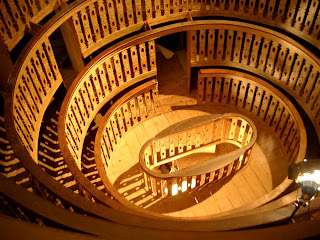
Il Teatro Anatomico dell’Universita’ di Padova

In Corea il primo disegno anatomico, il Sinhyongjangbudo, parte del trattato Tonguibogam (Principi e Pratiche della Medicina Orientale), veniva eseguito da Ho Chun (許浚, 허준, 1546-1615) agli inizi del XVII secolo, mentre i primi insegnamenti di anatomia moderna venivano impartiti nel 1910 all’Istituto di Medicina Severance, il predecessore dell’odierno Centro Medico Yonsei.
Oggi i medici ricevono cadaveri sui quali eseguire i loro studi non piu’ da ladri, ma attraverso lasciti volontari. In molti paesi, donare un cadavere per scopi scientifici e’ considerato un nobile contributo al progresso della scienza medica. In Corea, ancora fortemente influenzata dai principi del confucianesimo, donare corpi alla medicina e’ un atto piuttosto raro. Le scuole mediche nell’area metropolitana di Seoul ricevono in donazione dai 30 agli 80 cadaveri all’anno. Tuttavia, a giudicare dai video che circolano in Internet, prodotti da studenti in medicina che non mostrano il minimo rispetto per la donazione di cadaveri, non c’e’ da stupirsi che i coreani siano piuttosto contrari a donare il proprio corpo alla scienza.
Coloro che hanno scelto una professione connessa con la vita dell’essere umano dovrebbero essere piu’ coscienti di qualsiasi altro circa la dignita’ del corpo umano.

Giorgio Olivotto
Foto di Giorgio Olivotto
Seoul, Corea
11 aprile 2010

A Life, a Body, a Breakthrough

Some of the great discoveries of medical history that took place in the 18th century, such as the smallpox vaccine, advances in obstetrics and dental surgery, were made possible by the ‘educational material’ supplied by corpse thieves.
A story reported by the BBC a few years ago, The Body Snatchers’: Legacy to Medicine, outlines how essential the cadavers these thieves stole were to medical training at the time. The Irish emigrants William Burke (1792-1829) and William Hare (1792-1804) were one well-known body snatching duo who supplied bodies for medical research to a University of Edinburgh anatomy class. They were paid 7 pounds for each body. At first, they dug up newly buried corpses for the researchers. But as surveillance around graveyards got tighter, Burke—being Hare dead—committed murder to keep up with the demand for corpses. In one year—from November 1827 to October 1928—Burke killed 17 people in a row and sold their bodies to the anatomists. He was eventually caught when a student recognised the cadaver of a prostitute. In a fitting ending, Burke was hanged and his body was handed over to the same anatomy class at the University of Edinburgh as a cadaver.


European interest in understanding how the body works through cadavers goes back centuries before Burke and Hare. The first public dissection of a human body was carried out in 1315 by Mondino de Liuzzi (c.1270-1326), an Italian professor of surgery in Bologna. Later, On the Working of the Human Body written by the Belgian Andreas Vesalius (1514-1564), an anatomist at the University of Padua (Studium Patavium), provided the foundation for modern anatomy. Leonardo da Vinci (1452-1519), who approached anatomy not as a medical science but as a form of art, left 1750 anatomical charts of 30 different human bodies.

The Padua University Anatomic Theatre

In Korea, an anatomical chart known as Sinhyongjangbudo is included in Tonguibogam (The Principles and Practices of Eastern Medicine) written by Ho Chun (許浚, 허준, 1546-1615) in the early 17th century. The first modern anatomy class was held at Severance Medical School, the predecessor of Yonsei Medical Centre, in 1910.
Today, scientists get human bodies to study through donations, rather than thieves. In many countries, donating one’s body to science is thought of as a noble contribution to the development of medicine. In Korea, still under a strong influence from Confucianism, means that donations are rare. Medical schools in the Seoul metropolitan area receive only 30 to 80 donated bodies every year. But with videos circulating on the Internet of medical students disrespecting donated cadavers, it is no wonder that Koreans are reluctant to give their bodies to such a cause.
People who are in a profession that deals with human life should be more conscious of ‘the dignity of the human body’ than anyone else.

Giorgio Olivotto
Photo by Giorgio Olivotto
Seoul, Korea
April 11, 2010

Dai Fiori al Gioco per Ragazzi

Si dice che quando tre coreani si incontrano finiscono col giocare hwatu (花鬪, 화투, carte fiorite) un gioco, come ogni coreano ben sa, di origine giapponese. Durante il periodo di controllo giapponese della Corea (1910-1945), quando 80 kilogrammi di riso costavano 4 won, si legge che il ‘collaboratore’ Lee Wan-yong (李旺容, 이완용) avesse perso decine di migliaia di won giocando a carte finendo sulla prima pagina dei giornali del tempo. Da questa storia posso facilmente dedurre quanto il gioco fosse popolare a quel tempo.

Alcune carte hwatu

La cosa strana e’ che i giapponesi non giocano hwatu (hanafuda, 花札, in giapponese), anzi molti giovani non hanno mai visto un mazzo di carte hwatu. Nonostante questo, un’azienda giapponese sta ancora producendo mazzi di queste carte. L’azienda e’ la famosa Nintendo (任天堂株式会社, Nintendō Kabushiki Gaisha), che sta dominando i mercati mondiali con i suoi video-giochi producendo piu’ di 500 miliardi di yen (US$ 5.4 miliardi) di profitto netto.
Anche se produrre mazzi di carte hwatu non da profitti, l’azienda continua nel business perche’ non vuole dimenticare le sue radici. Nel 1899, Nintendo iniziava la sua attivita’ producendo mazzi di carte hanafuda. Il fondatore dell’azienda, Fusajiro Yamauchi (山内 房治郎, 1859-1940), era un’artista ed alcuni dei suoi dipinti vennero utilizzati nelle carte. Nel 1979, un dipendente della Nintendo mentre viaggiava in treno osservava un’altro passeggero che cercava di passare il tempo ‘giocando’ con un calcolatore elettronico e gli venne l’idea di applicare il concetto del hwatu ad un gioco elettronico e nasceva cosi l’ormai famoso Game Boys (Gioco per Ragazzi).
Durante la Guerra Del Golfo, in 1991, il Game Boys era cosi popolare che veniva considerato indispensabile per i soldati americani in Kuwait. Si dice che un giorno una caserma americana venisse completamente distrutta da un bombardamento nemico e che fra le rovine un soldato trovasse un Game Boys piuttosto ammaccato ma funzionante. Era il risultato della ricerca e sviluppo della Nintendo che collaudava i suoi modelli facendoli cadere dal tetto dell’azienda ben sapendo che i bambini regolarmente sbattono al suolo i loro giocattoli.
Durante una riunione intesa a far rivivere l’economia coreana il Presidente Lee Myung-bak (李明博, 이명박, 1941- ) suggeriva ai partecipanti: “Sarebbe una gran bella cosa se anche noi fossimo in grado di produrre giochi elettronici come la Nintendo.” Questo episodio mi fa venire alla mente il commento dell’ex Presidente Kim Young-sam’s (金泳三, 김영삼, 1927- ) a proposito del film Jurassic Park che aveva generato profitti corrispondenti all’esportazione di 1.5 milioni di auto della Hyundai. Quasi certamente President Lee pensava che essendo la Corea all’avanguardia nel campo della tecnologia informatica, non dovrebbe essere difficile per le aziende coreane, solamente se lo volessero, raggiungere il Giappone anche nella produzione di giochi elettronici.
Le persone coinvolte nel ramo potrebbero far notare che la fama della Nintendo non e’ dovuta alla produzione di carte hwatu. Tuttavia, Nintendo non sarebbe quello che e’ oggi se non fosse modesta al punto da continuare a produrre hanafuda da piu’ di 100 anni. Nintendo fa tesoro e si entusiasma per le nuove idee, una cultura aziendale che rispetta la creativita’ e lo sforzo costante nel soddisfare il cliente. I coreani sono probabilmente alla pari con i giapponesi per quanto riguarda la creativita’ e lo dimostra il fatto di essere stati capaci di modificare e sviluppare hwatu e da questo creare il Go-Stop (Va-Fermati), uno dei piu’ popolari giochi elettronici coreani.
Giorgio Olivotto
Seoul, Corea
4 aprile 2010

From Flowers to Game Boys

It is said that when three Koreans get together they play hwatu (花鬪, 화투, flower cards). The game originated in Japan, a well-known fact among Koreans. During the Japanese colonial occupation (1910-1945), when 80 kilograms of rice cost 4 won, the 'collaborator' Lee Wan-yong (李旺容, 이완용) reportedly lost tens of thousands of won on the game making newspaper headlines. I can guess from that story how popular the card game was at that time.

Some hwatu cards

However, the Japanese do not play hwatu (hanafuda, 花札, in Japanese). Many young people have never even seen it. But nonetheless a Japanese company still manufactures decks of flower cards. That is Nintendo (任天堂株式会社, Nintendō Kabushiki Gaisha), the company that dominates the world market for video game consoles and produces 500 billion yen (US$ 5.4 billion) in net profits.
Even though manufacturing decks of hwatu is not profitable, the company still produces them because it does not want to forget its roots. In 1899, Nintendo started as a manufacturer of hanafuda cards. The founder, Fusajiro Yamauchi (山内 房治郎, 1859-1940) used to be an artist himself and the cards also bore his paintings. In 1979, the company developed a portable game console. An employee travelling on a train saw another passenger killing time toying with an electronic calculator and came up with the idea of applying the concept of hwatu to an electronic game and so the famous Game Boys was born.
During the 1991 Gulf War, the Game Boys was so popular that it was regarded as a necessity for American soldiers dispatched to Kuwait. One day, a US military barracks was bombed and completely destroyed. In the ruins a soldier found a scorched and damaged Game Boys. Surprisingly, it worked. This was a direct result of the company’s research and development: Nintendo dropped a model Game Boys numerous times from the rooftop of the company headquarters to the ground, since after all, children carelessly drop their toys all the time.
In an emergency meeting aimed at reviving the economy, President Lee Myung-bak (李明博, 이명박, 1941- ) made a suggestion: “It would be good for us to develop game consoles like Nintendo’s.” This reminds me of former President Kim Young-sam’s (金泳三, 김영삼, 1927- ) remark that profits from the film Jurassic Park were nearly the same as those from exporting 1.5 million Hyundai cars. President Lee perhaps thought that as Korea is a leader in the IT field, Korean companies can easily catch up with Japan in the game industry if they want to.
Those in the IT field may say that Nintendo did not earn its reputation and fame with its flower cards. Yet today’s Nintendo game consoles could not have come to be without a company modest enough to continue manufacturing hanafuda for more than 100 years. Nintendo treasures its enthusiasm for new ideas, a corporate culture that respects creativity and its constant efforts to satisfy customers. Koreans are probably equal in one field: creativity. Koreans adapted and developed hwatu and from it created Go-Stop, one of Korea most popular games.

Giorgio Olivotto
Seoul, Korea
April 4, 2010

Nirvana non si Trova in un Brillante Cristallo

Il termine coreano sari (piccoli cristalli che spesso si trovano fra i resti dei corpi cremati di monaci buddisti) deriva dal sansrito sharira (corpo). Il Sustra della Luce Dorata spiega che nelle parole del Buddha, “Sari e’ una cosa rara perche’ proviene dall’ottenimento del nirvana.” Alcuni credono che quando un grande monaco muore, un numero maggiore di sari vengono trovati fra le sue ceneri che non fra le ceneri di un monaco meno importante.
Nel corso dei secoli, mentre il Buddhismo si spargeva nell’intera Asia, venivano attribuiti al sari poteri magici. Nel XVI secolo l’enciclopedia medica Bencao Gangmu (本草綱目) scritta da Li Shizhen (李時珍, 1518-1593) della dinastia Ming (明朝, 1368–1644), dice che il sari puo’ essere frantumato solamente da un corno di antilope. Lo studioso coreano Yi Kyu-gyong (李圭景, 이규경, 1788-1856) spiega che essendo il sari formatosi come il risultato di una grande energia yin (陰), cioe’ il principio cinese della passivita’ femminile, puo’ essere distrutto solamente se toccato da un corno di rinoceronte, il materiale rappresentativo dell’energia attiva della mascolinita’ dello yang (陽). Evidentemente, nel corso dei secoli, parecchi sono stati coloro che hanno cercato di sfruttare a loro vantaggio il potere sopranaturale del sari.
Un libro di storia della dinastia coreana dei Koryo (高麗國,고려국, 918-1392), parla del monaco Hyoga che usava ingannare il popolo facendoli credere che il sari, prodotto nel suo corpo durante l’illuminamento, non era nient’altro che miele mescolato con farina di riso. Nel 1313 il monaco veniva condannato ad una pena severa.
Nel XVIII secolo il famoso studioso coreano Yi Ik (李瀷, 이익, 1681-1763) criticava i monaci Buddhisti che pretendevano di trovare sari fra le ceneri dei morti. Diceva che sari venivano raramente trovati nel passato, mentre oggi sono molto comuni al punto che i monaci li trovano facilmente e poi costruiscono torri votive in modo da attirare i fedeli ai loro templi. Yi Ik addiritura affermava che alcuni monaci denunciavano uno contro gli altri in modo da stabilire se i sari contenuti nelle torri votive erano veri o falsi.
Oggi la scienza e’ in grado di dimostrare che i sari sono semplicemente che il risultato della disintegrazione di un corpo durante il processo di cremazione, che non ha nulla a che vedere con l’illuminamento Buddhista. Uno studio pubblicato nel 1995 in un giornale di medicina legale dice che sostanze cristalline possono formarsi durante la cremazione di un corpo umano a causa dell’incenerimento dei femori ad una temperatura superiore ai 1400 gradi Celsius. Evidentemente, i Buddhisti leggendo le parole del Buddha credono che i sari rivestono sempre un ruolo importante nella fede e milioni di pellegrini viaggiano ogni anno attraverso l’Asia per vedere le torri votive dei sari ed i santuari a loro dedicati.


Il grande monaco Buddista Popchong (1932-2010) e’ entrato in nirvana l’11 marzo scorso ed il suo corpo e’ stato cremato il 13 marzo. Persino nella morte il grande monaco ha dato la sua ultima lezione di come vivere una vita senza possesso. Ha chiesto che il suo corpo venga cremato in semplicita’ e la cremazione e’ stata davvero semplice: il corpo del monaco giaceva nel suo letto di bambu, coperto da un semplice e disadorno lenzuolo, posto in cima ad una pira funeraria. Le parole del monaco in punto di morte non sono certamente da dimenticare, “non cercate nemmeno minimamente sari fra le mie ceneri e non costruite nessuna torre votiva a mio nome.”
Popchon fu uno dei piu’ grandi capi spirituali dei nostri tempi, una figura che induce rispetto ed ammirazione sia dai Buddhisti che dai non Buddhisti. Ha vissuto la vita che predicava. La sua vita fu una continua meditazione sul concetto di possedere nulla di nulla. Insegnava che possedere qualcosa significa essere legati da quello che si possiede e continuamente ricordava a tutti l’ossessione del possedere chiedendo a tutti di lasciar perdere. Viveva in una piccola e modestissima capanna nelle montagne della provincia di Kangwon (江原道, 강원도). Non aveva mai trascorso la notte nel tempio Kilsang a Seoul, da lui fondato. Dopo le rare apparizioni in pubblico lasciava la citta’ per ritornare fra le sue montagne.
Come molti grandi capi spirituali del nostro tempo, Popchong era attivamente coinvolto nei problemi sociali. Aveva vissuto un ruolo attivo nel raggiungimento della democrazia in Corea. Era a capo del gruppo promotore della vita, carita’ e conservazione ambientale. Lavorava alla promozione dei rapporti fra le differenti religioni. Spesso ricordava, i coreani oggi possiedono una ricchezza materiale come mai prima d’ora, ma sono davvero felici per quello che possegono? Nella sua morte Popchong ancora una volta ci pone la domanda. Ha chiesto che tutti i libri che ha scritto non vengano mai piu’ pubblicati. Nel lasciare questo mondo, non ha voluto lasciarsi dietro nulla, persino il suo nome o la sua memoria.
Si spera che tutti noi continuiamo a ricordare ed ispirarsi a Popchong, alla sua vita esemplare ed ai suoi insegnamenti. Le sue parole ci ammoniscono che rimanere focalizzati su tesori materiali come i sari serve solo a distrarci dalli obblighi spirituali della nostra fede.

Giorgio Olivotto
Seoul, Korea
Photo by Chong Myo-hwa
28 marzo 2010

Nirvana not Found in a Shiny Crystal

The Korean word sari (small crystals sometimes found among the cremated remains of Buddhist monks) is derived from the Sanskrit word sharira (body). The Golden Light Sutra (金光明經) explains in the words of the Buddha, “Sari is a rare thing, because it comes from the attainment of nirvana.” Some people believe that when a renowned monk passes away, more sari are found among his ashes than in the remains of lesser monks.
Over the centuries, as Buddhism spread across Asia, certain mythological powers were attributed to sari. The 16th century medical encyclopaedia Bencao Gangmu (本草綱目) written by Li Shizhen (李時珍, 1518-1593) in the Ming Dynasty (明朝, 1368–1644) explained that sari can only be broken apart using the horns of antelopes. The Korean scholar Yi Kyu-gyong (李圭景, 이규경, 1788-1856) also said that because sari is created as a result of extreme yin (陰) energy, or the Chinese principle of feminine passivity, sari will melt when touched by rhino horns, the material of masculine active yang (陽) energy. Of course, some have tried to exploit the purported power of sari over the years.
A wicked monk named Hyoga appears in the history book of the Korean Koryo Dynasty (高麗國,고려국, 918-1392). He tricked people into believing that honey water mixed with rice flour was actually sari that came from his body during enlightenment. He was sentenced to a severe punishment for his trespasses in 1313. In addition, Yi Ik (李瀷, 이익, 1681-1763), a prominent Korean scholar in the 18th century, criticised monks for pretending to discover sari in the remains of the dead. He said that sari were rarely found in the past, but now it is very common for monks to find them and then build towers around sari to encourage pilgrimages to their temples. Yi Ik even said that some monks brought lawsuits against each other so they could find out whether sari in the towers were genuine or forgeries.
Scientists today claim that sari is merely a result of the body’s disintegration during the cremation process, not anything related to Buddhist enlightenment. A study published in a 1995 edition of a journal of legal medicine found that crystal-like substances can be formed when burning a human thighbone at a temperature of more than 1400 degrees Celsius. Of course, the faith of Buddhists in the words of the Buddha has meant that sari still plays an important role among the faithful. Millions of pilgrims travel across Asia to see the sari towers and shrines each year.


The late Venerable Popchong (1932-2010) entered into nirvana March 11 and his body was cremated March 13. Even in his death, he gave his last lesson on how to live a life without possessions. He asked for a very simple cremation and the ceremony was indeed a simple one: The late monk's body was laid on his bamboo bed, covered with an unadorned sheet and placed on a funeral pyre. The monk’s dying wish is not to be forgotten: “Do not try to find crystals nor build a tower.”
Popchong was one of the great spiritual leaders of our time, a figure who commanded great respect from Buddhists and non-Buddhists alike. He lived the life he preached. His life was a meditation on not possessing anything. He taught that possessing something means being bound by that possession. He cautioned against obsession and taught people to let go. He retreated to a tiny mountainside hut in Kwangwon Province (江原道, 강원도). He never headed a temple. He never stayed overnight in Kilsang Temple in Seoul, which he founded. He always headed back to his mountainside abode after his rare public engagements.
Like many great spiritual leaders of our time, Popchong was actively engaged in society. He played an active role in bringing about democracy in Korea. He also headed a group promoting life, charity and environmental conservation. He worked to promote communication across religions. Koreans now have more material wealth than ever. Yet, are they happier as a result of having more material possessions? In his death, Popchong again poses that question to all of us. He asked that all books he wrote be not published anymore. In leaving this world, he did not want to leave behind anything, not even his name or memory of him.
Yet, it is hoped that people will continue to remember and be inspired by Popchong, his exemplary life and his teachings. His words scold us for being focused on material treasures like sari that distract us from our spiritual obligations to our faith.

Giorgio Olivotto
Seoul, Korea
Photo by Chong Myo-hwa
March 28, 2010

Come gli Incidenti Formano la Storia

Nei Pensieri del filosofo francese Blaise Pascal (1623-1662) si legge una nota per la quale nessuno sembra rendersi conto che l’effetto di eventi geopolitici puo essere ben diverso se non fosse per un’incidente apparentemente triviale. Pascal scrive, “Se il naso di Cleopatra fosse stato piu’ corto, l’intera faccia del mondo sarebbe stata diversa.” Coloro che credono che la storia sia null’altro che la continuazione di incidenti casuali piuttosto che basata sulla ragione, spesso sono dalla parte di Pascal.
Si crede che se veramente il naso di Cleopatra (69-30 AC) fosse stato piu’ corto, Marco Antonio (82-30 AC) non si sarebbe innamorato della regina egiziana abbandonando la famiglia; la battaglia di Azio (31 AC), fra le forze di Ottaviano (63 AC-14 DC) e quelle unite di Marco Antonio e Cleopatra, non ci sarebbe stata; ed Ottaviano non sarebbe stato capace di consolidare le sue forze fino a farsi incoronare come primo imperatore dell’Impero Romano. Questi eventi, e le loro ramificazioni, non sarebbero entrati nella storia se un uomo non si fosse innamorato della regina egiziana.
Certamente non e’ possibile spiegare la storia solamente dagli incidenti, ma se si ricercano i precedenti non e’ difficile accorgersi che gli incidenti non sono affatto estranei.
Per esempio, il movimento di democratisazione in Corea dipende da molti eventi occorsi in precedenza. E quasi certo che uno di questi eventi fu il tentativo to mascherare la morte dello studente dell’Universita’ Nazionale di Seoul (서울大學校, 서울대학교) Park Chong-chol nel gennaio del 1987 giustificandola col fatto che “moriva nel preciso momento nel quale l’agente che lo stava interrogando sbatteva una mano sul tavolo.”
Basandosi su questo, lo storico inglese Edward Hallett Carr (1892-1982), che affermava che la storia e’ nient’altro che un interminabile dialogo fra passato e presente, nel suo famoso trattato La Storia Cosa E’? rigettava il punto di vista dell’importanza degli incidenti storici. Ma e’ solo casuale se nel XIV secolo il sultano ottomano Bajazet (1354-1403) fermava la sua marcia nell’Europa centrale perche’ soffriva di gotta? Lo storico inglese Edward Gibbon (1737-1794) scrive che l’incidente mostra che il tumore di un muscolo puo’ evitare o posticipare le miserie di un’intero popolo.
Il Muro di Berlino alla Porta di Brandenburgo il 10 novembre 1989

Poi c’e’ il crollo del Muro di Berlino nel 1989 che iniziava da un lapsus linguae di un portavoce del Partito Comunista della Germania dell’Est. Quando un giornalista gli chiese quando i tedeschi dell’est avrebbero potuto viaggiare liberamente nella Germania Occidentale, senza pensarci troppo rispose, “anche adesso.” Al che gli abitanti della Berlino dell’Est si precipitarono al muro armati di mazze e picconi dando inizio alla demolizione. Certamente, il crollo del Muro di Berlino era gia segnato nella storia, ma non c’e’ alcun dubbio che iniziava quel giorno e in quel modo drammatico come conseguenza di un incidente.
E questa e’ la ragione per la quale la storia diventa affascinante. Quanto monotona sarebbe la storia se non fosse per questi incidenti ed invece si svolgesse solamente sulla necessita’.

Giorgio Olivotto
Foto giornalistica
Seoul, Corea
21 marzo 2010

How Accidents Shape History

The French philosopher Blaise Pascal (1623-1662) remarks in his book Pensees that seemingly trivial occurrences we might not even be aware of affect geopolitical events. He famously wrote, “Cleopatra’s nose, had it been shorter, the whole face of the world would have been changed.” Those who support the historical view that history is the continuation of accidents based on causality rather than reason, often side with Pascal.
Had it been shorter, the thinking goes, Mark Antony (82-30 BC) would not have fallen in love with Cleopatra (69-30 BC), deserting his family; the Battle of Actium (31 BC) between the forces of Octavian (63 BC-14DC) and the combined forces of Mark Antony and Cleopatra would not have taken place; and Octavian could not have consolidated enough power to be enthroned as the first emperor of the Roman Empire. These events, and their subsequent ramifications, were conjured into existence because a man fell in love with an Egyptian queen.
Of course, it is not possible to explain history through accident alone. If one inquires into antecedents, accidents are prone to be the product of causality.
For instance, the democratisation movement in Korea depended on many prior events. It is fairly certain that one such event was the attempt to cover up the cause of Seoul National University (서울大學校, 서울대학교) student Park Chong-chol’s death in January 1987 by saying, “He died instantly when an interrogator hit the table.”
Therefore, British historian Edward Hallett Carr (1892-1982), who said history was an endless dialogue between the past and the present, rejected the view that emphasised the role of historical accidents in his renowned work, What is History? However, accidents certainly play a role in history. For example, the 14th century Ottoman Sultan Bajazet (1354-1403) stopped his expedition to central Europe because he was afflicted with gout. British historian Edward Gibbon (1737-1794) wrote that the incident showed that a tumour on one’s muscle could prevent or postpone the miseries of a people.

Berlin Wall at the Brandenburg Gate, November 10, 1989

Then there is the fall of the Berlin Wall in 1989, which was detonated by a slip of the tongue by a spokesman of the East German Communist Party. When reporters asked the spokesman when East Germans would be free to travel to West Germany, he inadvertently said, “Right now.” The East Berlin residents rushed to the wall with hammers and axes, bringing the wall down. Of course, the fall of the Berlin Wall must have a historical inevitability, but it was due to a historical accident that the wall came down on that day in such a dramatic way.
And this is the reason why history is so fascinating. How boring history would be if it were not for historical accidents, instead running only on necessity.

Giorgio Olivotto
Photo from media
Seoul, Korea
March 21, 2010